
Sci Fi Movies
Klara and the Sun (2026): Can an AI Friend Understand Human Love?

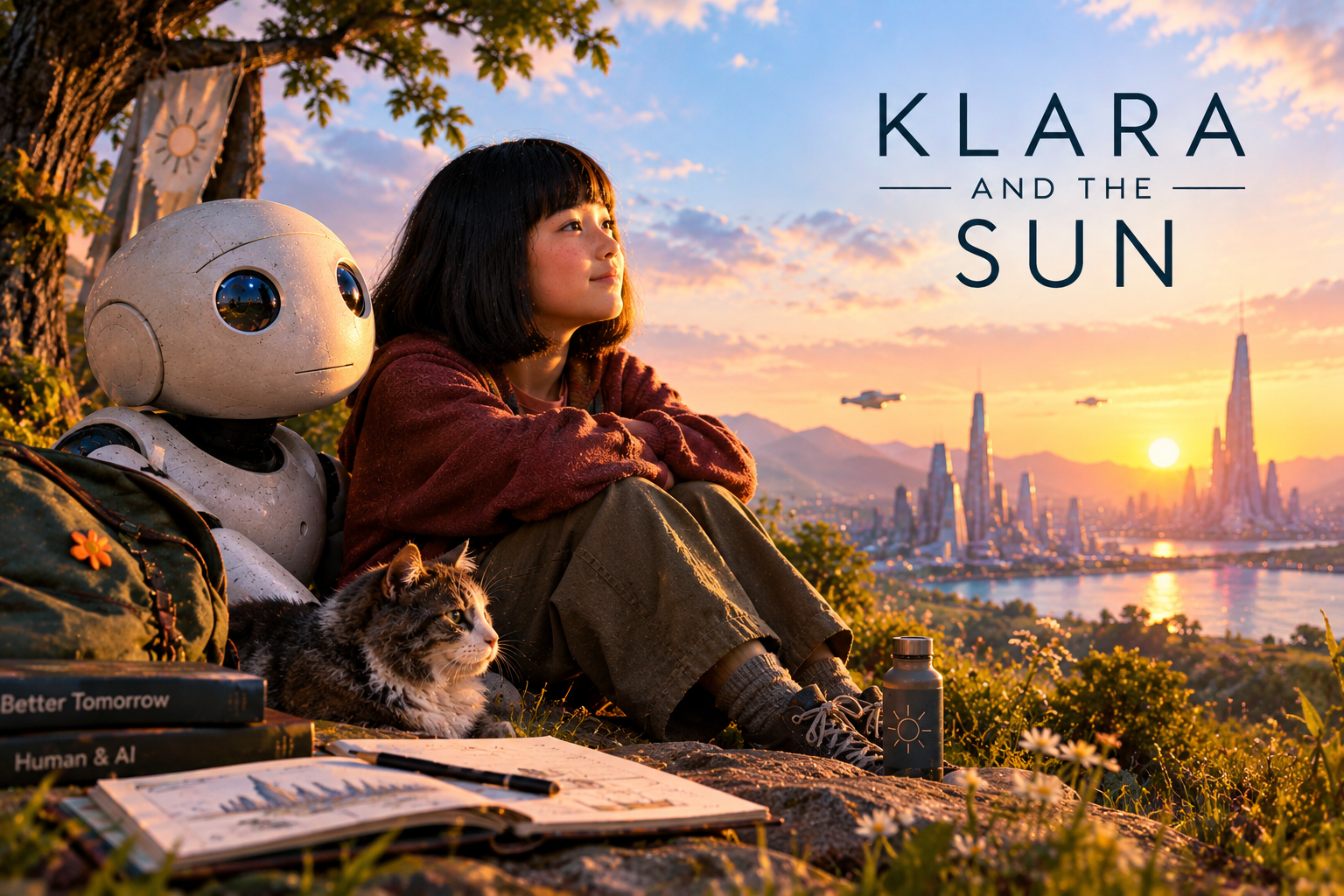
What if the person who understands your loneliness is not a person at all? That is the question at the heart of Klara and the Sun, a science-fiction drama starring Jenna Ortega as an artificial companion who enters the life of a seriously ill teenager. The idea has emotional potential, but the real challenge is whether the film can explore it with enough depth to leave a lasting impression.
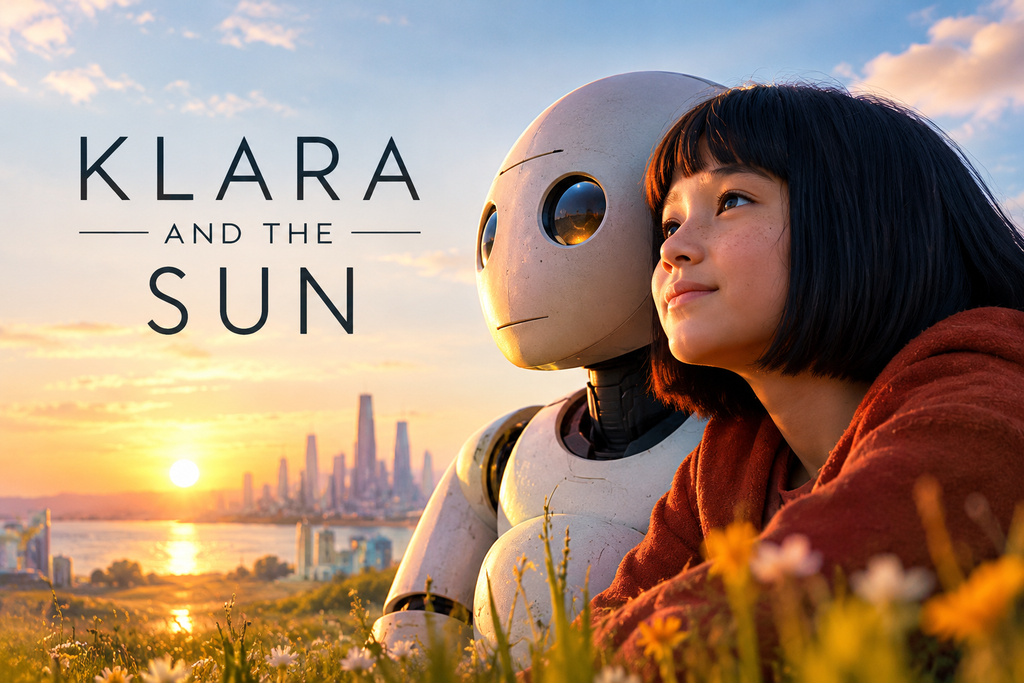
After watching the official trailer, my first reaction was not especially strong. Some parts caught my attention, but the overall preview did not fully convince me. My trailer rating is 3 out of 5. I have not watched the complete movie or read Kazuo Ishiguro’s novel, so this is an honest preview based on the trailer, the official film information, and published early reviews, not a full movie review.
Movie Details at a Glance
| Detail | Information |
| Movie | Klara and the Sun |
| Release date | October 23, 2026, in US theaters |
| Director | Taika Waititi |
| Screenplay | Taika Waititi and Dahvi Waller |
| Based on | Kazuo Ishiguro’s 2021 novel |
| Main cast | Aran Murphy |
| Also starring | Steve Buscemi and Natasha Lyonne |
| Genre | Science fiction, drama, comedy |
| Runtime | 116 minutes |
| Rating | PG-13 |
| My trailer rating | 3/5 |
Source: Sony Pictures’ official movie page and official trailer. Visit Sony Pictures | Watch the official trailer
My Trailer Verdict: An Interesting Idea That Needs More Impact
Trailer rating: 3/5
The trailer introduces a future where artificial companions can become part of a family’s everyday life. Jenna Ortega plays Klara, an Artificial Friend who hopes to find a home. She eventually meets Josie, a teenager whose life is complicated by illness and family difficulties.
The emotional setup is clear, but the trailer did not make a particularly powerful first impression on me. I understand what the story is trying to explore, yet I wanted the preview to give me a stronger reason to become emotionally invested.
That doesn’t mean the full movie cannot work. A trailer can only show selected moments, and a thoughtful story may need more time to develop its characters. My concern is more specific: will the movie make viewers feel the relationship between Klara and Josie, or simply tell us that their bond is important?
That difference could decide whether this film becomes genuinely moving or just another science-fiction drama with a promising idea.
The Most Important Question: What Makes Klara a Friend?
Many science-fiction stories use artificial intelligence to ask whether machines can think. Klara and the Sun has an opportunity to explore a more personal question: can a machine become emotionally important to someone even if its feelings are not the same as human feelings?
Klara is not simply a futuristic gadget in a household. She is designed to be an Artificial Friend, and her relationship with Josie sits at the center of the story. Sony’s official synopsis describes Klara’s loyalty and sense of wonder as forces that begin to bring light into Josie’s difficult world.
But there are three different questions hidden inside that premise.
1. Does Klara understand love, or does she learn how to show it?
A machine might recognize sadness, respond to a person’s needs, and remember what makes someone happy. Those abilities can look like love from the outside. But are they the same as experiencing love?
The film will be more compelling if it allows viewers to think about this difference rather than giving an easy answer. Klara’s actions may matter to Josie regardless of what Klara experiences internally. That tension is more interesting than simply deciding that AI is either good or bad.
2. Why does a family need an artificial friend?
Josie’s illness and her complicated relationship with her mother, Chrissie, give the story a human problem that technology cannot automatically solve.
A companion might offer attention and comfort, but it cannot necessarily repair every family conflict. If Klara helps the family, the movie needs to show what makes that connection meaningful, including the limits of what she can do.
This is where the story could become more than a familiar tale about a robot learning to act human.
3. Can artificial companionship make loneliness worse?
An artificial friend could help someone feel less alone. However, if people begin relying on machines instead of building relationships with one another, companionship could become a substitute for dealing with difficult emotions.
The premise creates room for this question, although it remains to be seen how deeply the film explores it. I would like the movie to take this possibility seriously instead of treating technology as a simple solution to loneliness.
The Story: A Robot Enters a Family That Is Already Struggling
Klara wants to find a home. Her life changes when she meets Josie, a young girl who chooses her as a companion. Josie’s mother, Chrissie, is dealing with a difficult family situation, and the household carries the weight of loss.
Klara enters this environment with an unusual perspective. She observes people and tries to understand their behavior, while her loyalty to Josie gradually becomes important to the family.
The central conflict is not simply whether Klara can perform her duties as an artificial companion. It is whether her presence can make a real difference when the people around her are facing problems that cannot be fixed easily.
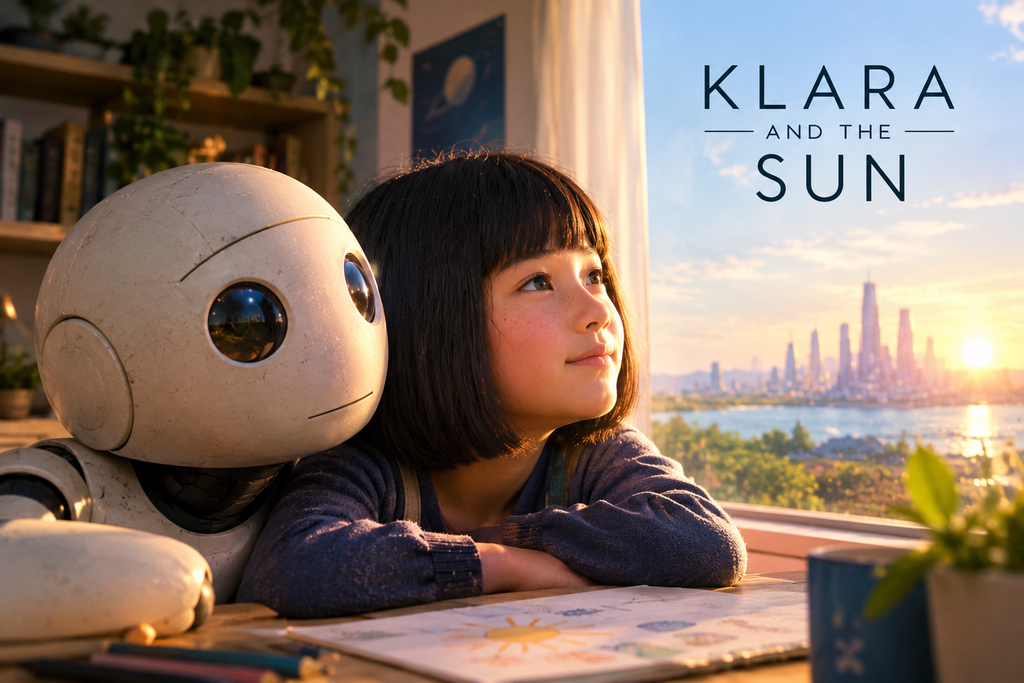
That setup gives the film two connected stories: Klara’s attempt to understand human behavior and a family’s struggle with illness, emotional distance, and loss.
The story also comes from a novel set in a future shaped by technological inequality and genetic enhancement. These elements create a larger world beyond Klara’s relationship with Josie. The movie has an opportunity to connect that world to the characters’ personal lives, rather than leaving its futuristic ideas in the background.
The Cast: Why These Roles Matter
<text>Jenna Ortega as Klara</text>
Ortega takes on a role that appears very different from her familiar dark, deadpan screen persona in Wednesday. Klara needs to communicate curiosity, hope, and emotional attention while also feeling like an artificial being. The important test is whether Ortega can make the character feel distinctive without making her seem like an ordinary human with a few robotic mannerisms.
I am not completely convinced by the casting yet, based on the trailer alone. The full performance will be a better measure than a short preview.
<text>Mia Tharia as Josie</text>
Josie is central to the emotional relationship that drives the story. Her illness gives the plot a serious dimension, but her character needs to feel like a person with her own thoughts and desires, not just someone for Klara to protect.
<text>Amy Adams as Chrissie</text>
Chrissie’s role matters because she is both Josie’s mother and an adult dealing with a difficult family situation. Her relationship with Josie could add complexity, especially if the film shows how fear and love shape how a parent treats a child.
<text>**The supporting cast</text>
Aran Murphy, Steve Buscemi, and Natasha Lyonne also appear in the film. Their roles help build the world around Klara, although the official synopsis gives the most attention to Klara, Josie, and Chrissie.
The film is directed by Taika Waititi, known for combining humor with emotional material. That combination could give this story a distinctive identity, but it also creates a challenge: the comedy must fit the serious themes rather than weaken them.
What Early Reviews Suggest, and Why They Matter
The film has already attracted a range of critical responses following its festival screenings. Some reviewers have praised its imaginative visuals and performances, while others have argued that its humor and sentimental approach do not fully suit the novel’s quieter ideas.
Screen Daily, for example, described the adaptation as an engaging science-fiction fable with imaginative visuals, while suggesting that expanding the story beyond Klara’s perspective loses something important. The Guardian and The Independent were more critical of the film’s handling of its emotional and philosophical themes.

These are critics’ opinions, not a final verdict for every viewer. Still, their disagreement points to the film’s central risk: balancing a gentle, hopeful character with a story about illness, loss, artificial intelligence, and inequality.
If the humor feels too broad, the emotional moments may lose their power. If the film focuses only on sadness, it may fail to capture the curiosity and hope that make Klara interesting in the first place.
For me, the concern is not whether the movie includes serious themes. It is whether those themes receive enough attention to make the story memorable.
Sources: Screen Daily review | The Guardian review | The Independent review
The Book Connection: What Movie-Only Viewers Should Know
Klara and the Sun is based on the 2021 novel by Kazuo Ishiguro, the Nobel Prize-winning author. That matters because the film is adapting an existing story rather than building its world from scratch.
The novel explores artificial companionship, human vulnerability, and a future in which technology and social inequality influence people’s lives. Those ideas provide more than background for the movie. They shape the questions viewers may bring to Klara’s relationship with Josie.
I have not read the novel, so I cannot fairly judge how closely the film follows it. However, the adaptation faces a clear challenge: a book can spend time inside a character’s observations and thoughts, while a movie must communicate those ideas through performance, images, dialogue, and storytelling.
The strongest adaptation would not simply reproduce the plot. It would find a cinematic way to make Klara’s unusual view of the world meaningful to the audience.
What I Want the Movie to Get Right
Instead of expecting the film to answer every question about AI, I want it to explore a few questions properly.
- A believable bond: Josie and Klara’s friendship should develop through meaningful moments, not only emotional speeches.
- A clear view of AI: Klara should feel different from a human character without becoming a collection of predictable robot behaviors.
- A family with depth: Chrissie and Josie should have understandable reasons for their actions, even when their relationship is difficult.
- A future that matters: The film’s technology and social divisions should affect the story, not exist only as decoration.
- A satisfying emotional payoff: The ending should grow naturally from the characters’ choices instead of relying only on sadness to create an impact.
These are expectations, not claims about scenes in the completed film. They are the elements that could make its premise work for me.
Should You Watch Klara and the Sun?
This film may appeal to viewers who enjoy character-focused science fiction, emotional family stories, and questions about the future of artificial intelligence. It could also interest Jenna Ortega fans who want to see her in a different kind of role.
Viewers looking primarily for action, suspense, or a fast-moving science-fiction adventure may want to know that the official premise emphasizes companionship and family relationships rather than action.
| If you enjoy… | What to consider |
| AI and philosophical questions | The concept offers plenty to think about, but the depth of its exploration is the key question. |
| Emotional family dramas | Josie’s illness and her relationship with Chrissie provide the human side of the story. |
| Jenna Ortega’s performances | Klara is a different type of role from her better-known dark characters. |
| Thoughtful, slow-building science fiction | The premise may appeal if you prefer ideas and relationships over spectacle. |
| Fast-paced sci-fi action | The official synopsis does not present this as an action-driven film. |
Final Verdict: The Idea Is Stronger Than My First Impression
Klara and the Sun has a premise that deserves more than a simple story about a robot becoming part of a family. Its most interesting possibility is the relationship between artificial companionship and real human need. Klara may be designed to help people feel less alone, but the film has to show what that connection means when a family faces illness, uncertainty, and loss.
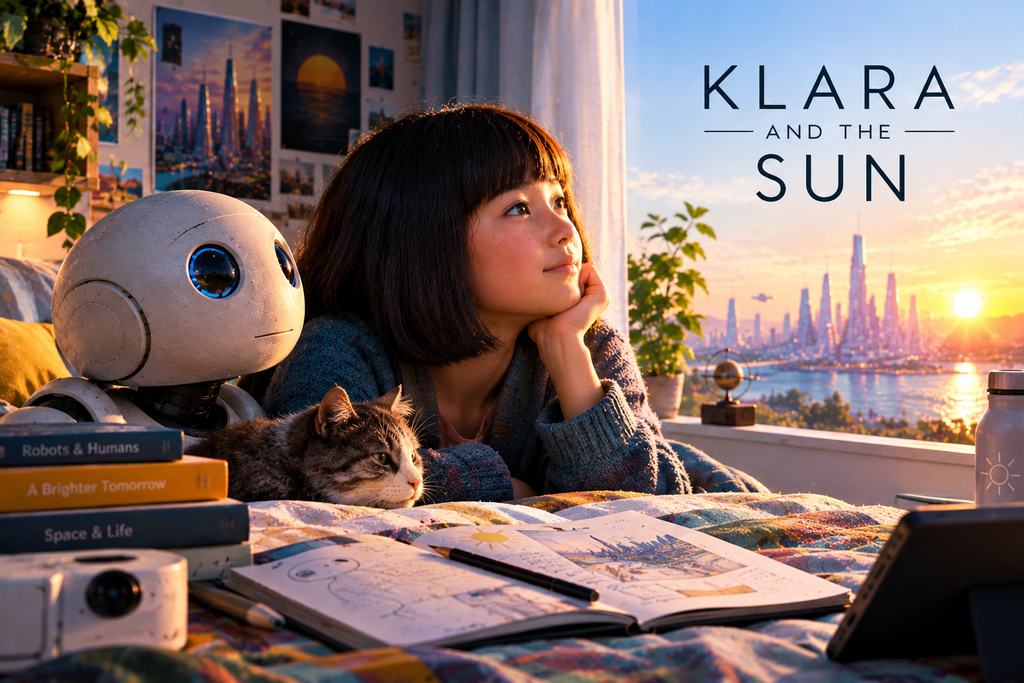
My first impression of the trailer was underwhelming, so I give it 3/5. I am interested in the movie’s central idea, but I want the finished story to explore AI and human connection with more depth than the preview convinced me it would.
The early reviews have made me more cautious, especially about whether the film can balance its humor with its serious themes. Even so, I would rather judge the complete experience on its own merits than treat a trailer or critical response as the final word.
My current verdict: worth considering for its concept, but not yet a must-watch for me. The movie’s biggest opportunity is also its biggest test: making audiences care about an artificial friend while asking what friendship, love, and humanity really mean.
Editorial note
This is a trailer-based preview, not a full review. The trailer rating reflects my first impression only. Release information, cast details, and the premise are based on official film information; critical responses are attributed to the publications that reviewed the movie.


What happens when a magical cat is given an important mission but cannot resist turning everything into chaos? That is the idea behind The Cat in the Hat (2026), Warner Bros.’ upcoming animated adventure based on the beloved book by Dr. Seuss.
After watching the full trailer, I came away feeling genuinely entertained. The Cat’s unpredictable personality, the creative animation, and the mix of visual and dialogue-based comedy make this movie look like a fun experience. However, one question remains: will the complete story be as interesting as the trailer makes it look?
I am particularly curious about the Cat’s magical hat and how his latest assignment will unfold. The trailer has given me a good reason to look forward to the movie, and I would definitely like to watch it in theaters.
Here is what we know about the film, its voice cast, its story, and why it has caught my attention.
The Cat in the Hat (2026): Quick Movie Facts
| Movie Information | Details |
| Official title | The Cat in the Hat |
| Release year | 2026 |
| US theatrical release | November 6, 2026 |
| International release | Begins November 4, 2026 |
| Genre | Animation, Fantasy, Comedy, Adventure, Family |
| Directors | Alessandro Carloni and Erica Rivinoja |
| Screenplay | Alessandro Carloni and Erica Rivinoja |
| Screen story | Caroline Williams |
| Based on | The Cat in the Hat by Dr. Seuss |
| Lead voice actor | Bill Hader as the Cat |
| Production studio | Warner Bros. Pictures Animation |
| Distributor | Warner Bros. Pictures |
| Runtime | Approximately 91 minutes, according to Apple TV |
Source: Official Warner Bros. movie website and Apple TV. International release dates vary by country.
What Is the Story of The Cat in the Hat (2026)?
This animated adaptation gives the famous Cat a new assignment, taking him beyond the familiar idea of a mischievous visitor who turns an ordinary day upside down.
According to the official synopsis, the Cat works for the Institute for the Institution of Imagination and Inspiration, LLC, known as the I.I.I.I. His mission is to cheer up Gabby and Sebastian, two siblings who are struggling to adjust after moving to a new town.
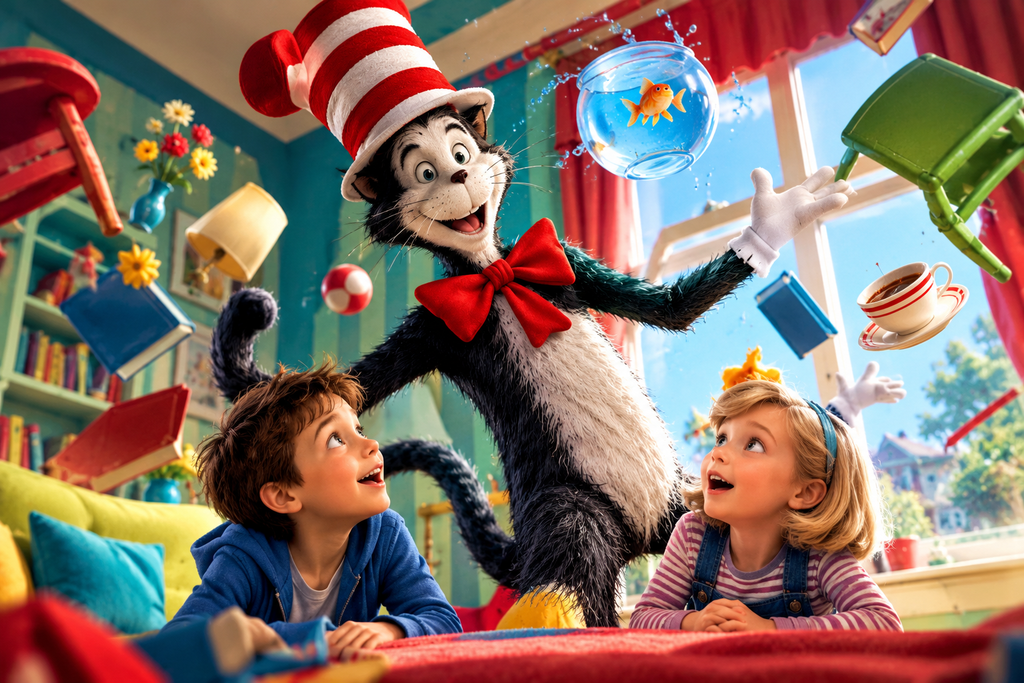
That sounds like a straightforward task. The problem is that the Cat is known for taking things too far.
His unusual approach to making people happy could turn the assignment into a much bigger adventure. There is also something important at stake: the Cat may lose his magical hat if he fails to prove himself.
This detail is one of the most interesting parts of the premise. The hat is not simply an accessory associated with a famous character. Its importance to the mission gives the story an additional question to explore.
Will the Cat complete his assignment successfully, or will his own unpredictable behavior get in the way?
The official synopsis establishes the central conflict, but it does not reveal the full journey or ending. That leaves room for the movie to surprise audiences when it reaches theaters.
My Honest Reaction to the Official Trailer
My first reaction was simple: the trailer is very funny and entertaining.
I watched the full trailer, and I liked its overall energy. The Cat immediately stands out as the character who drives the adventure, while the combination of visual comedy and dialogue-based humor gives the preview a playful feel.
I also found the animation unique and creative. Rather than judging the movie only by its familiar title, I became interested in seeing how this new animated version develops its own identity.
However, there is one area where I still have questions: story clarity.
The trailer introduces an imaginative adventure, but I want the complete film to make its central conflict feel clear and meaningful. Funny moments can attract attention, but viewers also need a reason to care about what happens next.
That is not a judgment of the entire movie. I have not watched the full film, so I cannot say whether the story succeeds or fails. It is simply the main thing I want to evaluate when I see it.
My overall reaction remains positive. The trailer is interesting enough to make me want to watch the movie, and I hope the finished adventure delivers even more than the preview suggests.
The Magical Hat: The Detail I Want to Understand Most
Of all the questions raised by the trailer and official synopsis, the Cat’s magical hat interests me the most.
The official premise makes the hat part of the stakes surrounding his assignment. If the Cat cannot prove himself, he could lose it. That gives his adventure a clear risk beyond simply getting into trouble.
I want to see how the film develops this idea. What makes the hat so important to the Cat? How does it connect to his unusual abilities and his mission? And what would losing it mean for him?
These are questions I hope the movie answers through its actual story rather than simply using the hat as a visual feature.
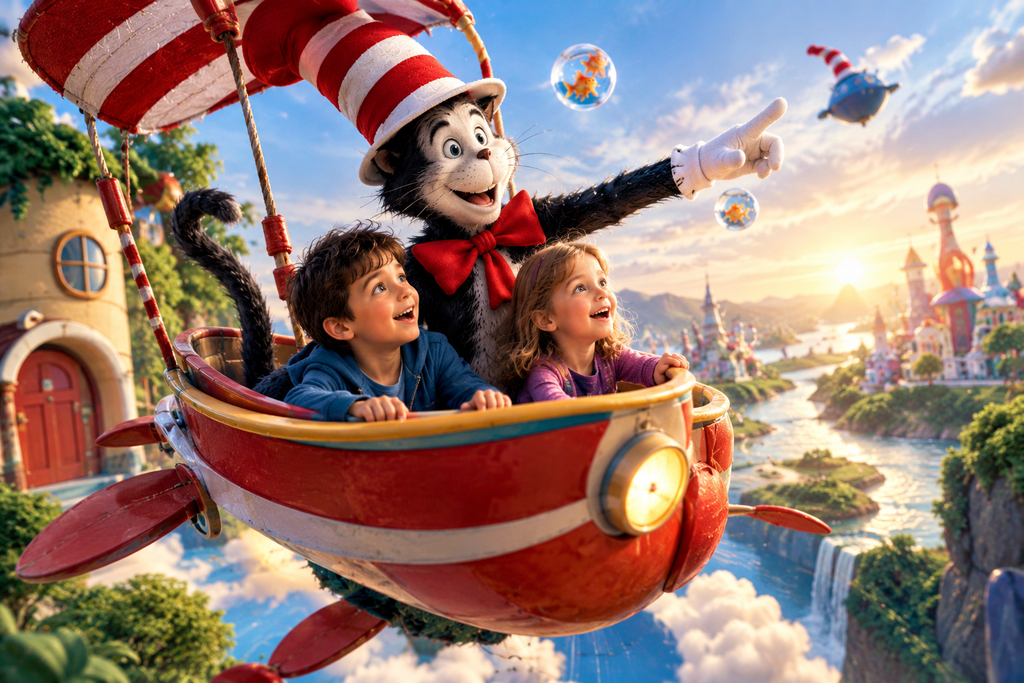
The idea also creates an opportunity for the filmmakers to connect the comedy with the plot. If the Cat’s actions repeatedly threaten his mission, the magical hat could become a meaningful part of the adventure instead of a detail that exists only because audiences recognize it.
For me, this is one of the strongest reasons to see what happens beyond the trailer.
What Makes the Animation and Comedy Stand Out?
The animation is another reason this film caught my attention.
From the trailer, the visual style feels distinctive and imaginative. The world appears suited to a character whose personality is built around mischief, surprise, and unusual situations.
I also like that the comedy is not limited to one approach. The trailer combines visual humor with spoken jokes, giving the Cat different ways to create amusing moments.
That combination could work well for a family audience. Younger viewers may respond to the expressive animation and physical comedy, while older viewers may enjoy the dialogue and the character’s irreverent personality.
Still, there is an important difference between a funny trailer and a consistently entertaining movie.
A trailer can introduce its best jokes and most striking visuals in a short space of time. The full film needs to keep that energy going without making every scene feel like another disconnected gag.
I hope that the animation and humor work together to tell a coherent story. If they do, the movie could offer more than a series of funny moments.
The Cat in the Hat (2026) Cast and Voice Actors
Warner Bros. has announced a voice cast featuring several recognizable performers. Bill Hader leads the film as the Cat, with Xochitl Gomez and Tiago Martinez voicing the two siblings at the center of his mission.
| Voice Actor | Character or Credit |
| Bill Hader | The Cat in the Hat |
| Xochitl Gomez | Gabby |
| Tiago Martinez | Sebastian |
| Matt Berry | The Fish |
| Quinta Brunson | Sherri |
| America Ferrera | Carmen |
| Giancarlo Esposito | Voice role |
| Bowen Yang | Voice role |
| Tituss Burgess | Voice role |
| Paula Pell | Voice role |
Character names are included where confirmed by the official movie information and Apple TV. The other roles are left unspecified here rather than guessing their identities.
Bill Hader is a particularly interesting choice for the lead role because the Cat needs a voice that can carry both comedy and personality. His performance will be central to how audiences experience this version of the character.
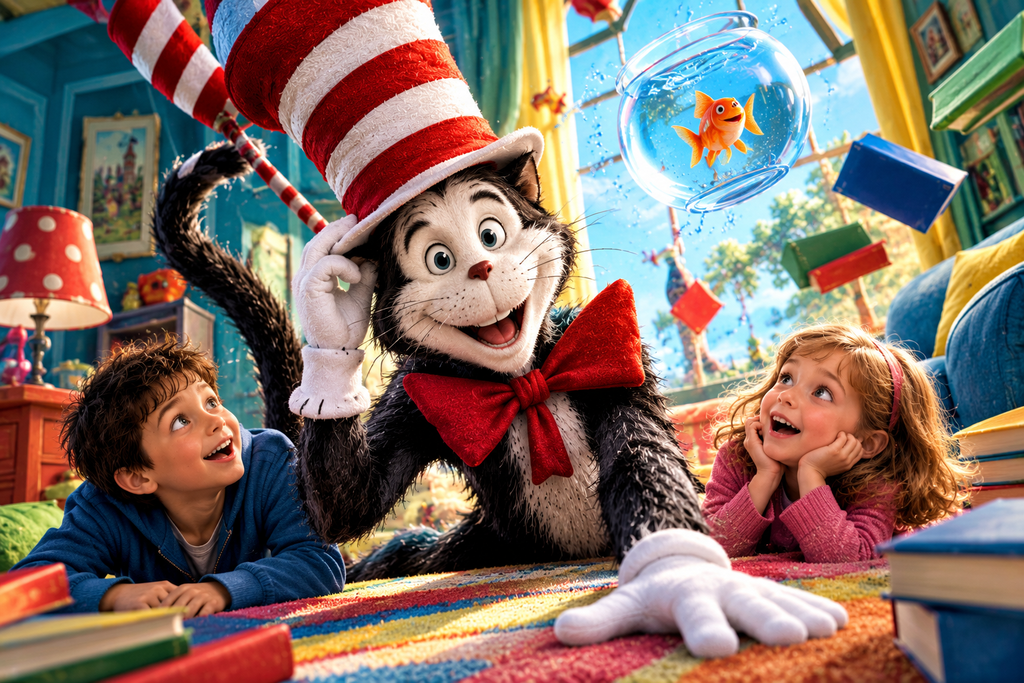
The supporting cast also matters. Gabby and Sebastian are not just characters surrounding the Cat; their adjustment to a new town is the reason for his assignment in the first place.
I am interested in seeing how the voice performances bring those relationships to life. Good comic timing can make an animated character memorable, but believable reactions and character development can help the story feel more complete.
Who Is Directing the Movie?
The Cat in the Hat is directed by Alessandro Carloni and Erica Rivinoja, who also wrote the screenplay. Caroline Williams receives the screen-story credit, and the film is based on Dr. Seuss’s book.
The distinction between screenplay and screen story is worth getting right. These are separate credits, so they should not be combined into a single writing credit.
The movie is being produced by Warner Bros. Pictures Animation and distributed by Warner Bros. Pictures. According to the official website, it is the studio’s first full-length feature film under the Warner Bros. Pictures Animation name.
That makes the release noteworthy for the studio as well as for fans of Dr. Seuss. The film is bringing a familiar literary character into a new animated feature designed for today’s family audience.
When Does The Cat in the Hat (2026) Come Out?
The US theatrical release date is November 6, 2026. The film is also scheduled to arrive in international markets beginning November 4, 2026, with dates varying by country.
Warner Bros. lists a theatrical and IMAX release across North America.
If you plan to watch the movie on opening weekend, check your local cinema listings as the release date approaches.

For confirmed dates and updates, visit the official release-date page.
Is The Cat in the Hat Suitable for Kids and Adults?
Based on its official premise and trailer, the film appears aimed at both children and adults.
For children, the appeal is easy to understand: a mischievous talking cat, an imaginative animated world, magical elements, and plenty of comedy.
Adults may be interested for a different reason. The character comes from a well-known Dr. Seuss book, and this adaptation offers a new animated interpretation rather than simply repeating the original story in the same format.
Families may therefore find it an appealing option for a cinema trip. However, whether it works equally well for different age groups will depend on the complete film, including its humor, pacing, and story.
I would not make a final judgment about its quality for family audiences based on the trailer alone.
Three Things I Hope the Full Movie Delivers
There are three things I particularly want to see when I watch the finished film.
1. A story that is easy to follow
The imaginative premise is promising, but I want the Cat’s assignment and its consequences to remain clear as the adventure develops. A strong story will give the comedy a purpose.
2. A meaningful role for the magical hat
Since the official synopsis makes the hat part of the Cat’s stakes, I hope the film explores why it matters and how it affects his decisions.
3. Comedy that makes the adventure better
The trailer has already shown me a style of humor I enjoy. Now I want to see that humor support the characters and story rather than replace them.
These are my expectations, not claims about scenes or events in the finished movie. I will be able to assess them properly after watching the full film.
Final Verdict: Is The Cat in the Hat (2026) Worth Watching?
Based on the trailer, The Cat in the Hat (2026) is one animated adventure I am looking forward to seeing.
I found the preview very funny and entertaining, and the creative animation gives the film a distinctive identity. The Cat is the character who caught my attention most, while the mystery surrounding his magical hat gives me another reason to be curious.
My main question is whether the full story will be as engaging as the trailer. I want the film to combine its visual imagination and comedy with a clear, satisfying adventure.
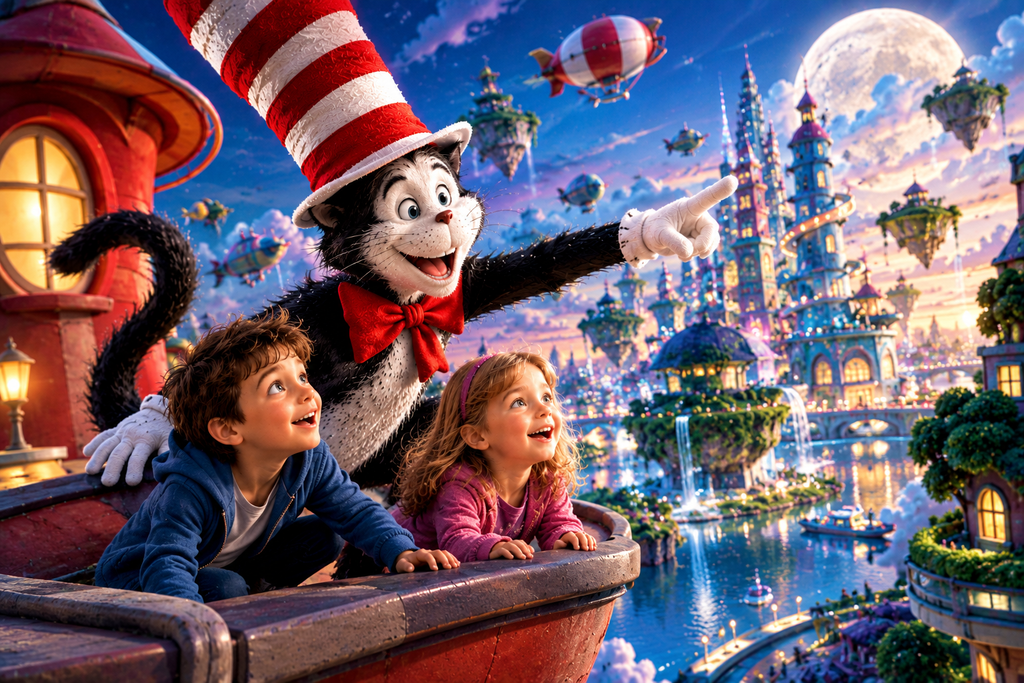
Would I watch it in theaters? Absolutely. The trailer has made me interested enough to want the complete experience, and I hope the finished movie is even more entertaining than the preview.
I have not watched the full film yet, so I am not giving it a movie rating or presenting this as a full review. My opinion is based on the trailer and the officially published movie information available before release.
For now, I am excited to see what the Cat does next. The real test will be whether his magical chaos can deliver a story audiences remember after the jokes are over.
Official Sources and Further Reading
- The Cat in the Hat – Official Warner Bros. Movie Website
- Official Worldwide Release Dates
- The Cat in the Hat – Apple TV
- The Cat in the Hat – Rotten Tomatoes
Editorial note: This is a trailer-based preview. The author has watched the trailer but has not watched the complete movie. Personal impressions and expectations are clearly distinguished from officially published facts.
Action Movies
Dune: Part Three (2026) – Release Date, Cast, Characters, Story, Trailer & Latest Updates

What happens when Dune: Part Three: the man who conquered an empire discovers that winning the throne may have been the beginning of his greatest mistake?
In Dune: Part Three (2026), Paul Atreides has become the most powerful man in the known universe. Yet his position as emperor may not protect him from the enemies gathering around him—or from the consequences of his own rise to power. Political conspiracies, dangerous new threats, and his complicated relationship with Chani are set to shape the next chapter of Denis Villeneuve’s science-fiction saga.
With Timothée Chalamet returning as Paul Atreides and Robert Pattinson joining the story as the mysterious Scytale, the upcoming film promises a different kind of conflict. Instead of focusing only on survival and the struggle to gain power, this chapter turns toward the price of holding it.

Scheduled for release in December 2026, Dune: Part Three is the concluding installment of Villeneuve’s three-film saga. Inspired by Frank Herbert’s novel Dune Messiah, the film will explore what happens after Paul’s extraordinary rise—and whether even an emperor can control the future he helped create.
Dune: Part Three Release Date
Dune: Part Three is scheduled to arrive in North American theaters and IMAX on December 18, 2026. International releases are scheduled to begin on December 16, 2026, although the exact date may vary by country.
The film comes from Warner Bros. Pictures and Legendary Pictures, with Denis Villeneuve returning as director and co-writer. Its release continues one of modern science fiction’s most ambitious cinematic adaptations.
For viewers planning to watch it in Pakistan or another international market, it is worth checking local cinema listings closer to release, as international schedules can differ.
Quick release details
- Movie: Dune: Part Three
- Release date in North America: December 18, 2026
- International release begins: December 16, 2026
- Director: Denis Villeneuve
- Screenplay: Denis Villeneuve and Brian K. Vaughan
- Based on: Dune Messiah by Frank Herbert
- Distributor: Warner Bros. Pictures
- Expected formats: Theaters and IMAX
Source: Official Dune movie website.
What Is Dune: Part Three About?
The story takes place nearly two decades after Paul Atreides seized control of the Imperium. He is no longer simply the young heir trying to survive the dangerous political world of Arrakis. He now rules an empire—and must confront the consequences of his reign.
According to the official synopsis, Paul faces old allies, terrifying new threats, betrayal, and a conspiracy that could threaten the future of his empire. Visions of the Imperium’s possible collapse also haunt him, while Chani becomes central to the unfolding mystery.
These details suggest that the central question is no longer simply whether Paul can defeat his enemies. It is whether he can protect the people he loves while dealing with the consequences of the power he has acquired.
The film’s premise creates several compelling questions:
- Can Paul maintain control of an empire when powerful enemies want to bring him down?
- What role will Chani play in the conspiracy surrounding him?
- Why is the mysterious Scytale such an important new presence?
- Will Paul’s visions help him avoid disaster, or make his choices even more complicated?
The answers remain part of the film’s story. Until the movie is released, it is best to distinguish the confirmed synopsis from theories about how these conflicts will end.
Timothée Chalamet Returns as Paul Atreides
Timothée Chalamet returns as Paul Atreides, the central figure in Villeneuve’s Dune films.
Paul’s journey has transformed him from a young member of House Atreides into a ruler whose decisions affect entire worlds. His abilities, political position, and connection to the Fremen have made him an extraordinary figure—but his growing influence also creates new dangers.
In Dune: Part Three, Paul must face the consequences of his rule. That makes his character especially interesting: possessing enormous power does not necessarily mean having control over every outcome.
The official synopsis describes him as a ruler facing visions of imperial collapse and a conspiracy closing in around him. Rather than assuming that Paul will emerge victorious, audiences can expect his decisions and their consequences to be central questions of the story.
Robert Pattinson as Scytale: The New Mystery
One of the most intriguing additions to Dune: Part Three is Robert Pattinson, who joins the cast as Scytale.
Scytale is associated with the political conspiracy surrounding Paul, making his introduction an important development for the next chapter. The character also has a significant place in Frank Herbert’s Dune Messiah, the novel inspiring the film.
But what makes Scytale dangerous? Is he simply another enemy seeking power, or does his role involve a more complicated plan?
Those questions are worth exploring without revealing unconfirmed plot details. Scytale’s exact motivations and how the film adapts his role should be judged through official material and the finished movie, rather than assumptions based solely on his presence in the cast.

For viewers unfamiliar with the books, Pattinson’s character offers a new point of curiosity. For readers of Dune Messiah, the challenge will be seeing how Villeneuve translates a complicated character from the page to the screen.
Dune: Part Three Cast and Characters
The film brings back several familiar faces while introducing new characters who may change the political balance of the story.
| Actor | Character |
| Timothée Chalamet | Paul Atreides |
| Zendaya | Chani |
| Robert Pattinson | Scytale |
| Rebecca Ferguson | Lady Jessica |
| Florence Pugh | Princess Irulan |
| Jason Momoa | Duncan Idaho |
| Javier Bardem | Stilgar |
| Anya Taylor-Joy | Alia Atreides |
| Charlotte Rampling | Reverend Mother Mohiam |
| Isaach de Bankolé | Farok |
| Nakoa-Wolf Momoa | Leto II |
| Ida Brooke | Ghanima |
The cast combines central characters from the previous films with newcomers and figures whose importance becomes clearer in the later stages of Herbert’s saga.
Zendaya as Chani
Chani is expected to remain central to the emotional and political conflict. The official synopsis specifically places her at the heart of the mystery surrounding Paul.
Her relationship with Paul is important not only because of their personal history but also because the choices surrounding his rule have consequences for the people closest to him.
A key question for the new film is how Chani responds to the dangers surrounding the emperor—and how her own decisions influence the story.
Rebecca Ferguson as Lady Jessica
Rebecca Ferguson returns as Lady Jessica, Paul’s mother and a significant figure in the world of the Bene Gesserit.
Jessica’s background makes her an important character to watch, particularly for viewers interested in the political and religious forces shaping the Dune universe. However, her exact role in the new film should not be overstated before the full story is available.
Newcomers may find her character easier to understand by remembering that the Dune universe is shaped by powerful families, competing institutions, and long-term plans that often extend beyond a single generation.
Florence Pugh as Princess Irulan
Florence Pugh returns as Princess Irulan, a member of the imperial political world.
Her position connects her to the struggle for power surrounding Paul. In a story built around dynastic interests and political alliances, Irulan’s presence adds another important dimension to the imperial conflict.
How her role develops in the new installment remains something audiences will have to discover.
Jason Momoa as Duncan Idaho
Jason Momoa returns to the Dune saga as Duncan Idaho. His return is especially noteworthy because audiences familiar with the previous film will remember the events surrounding his character.
The Dune books explore ideas that make identity, memory, and the return of familiar figures more complicated than they might appear. The film’s treatment of Duncan will be an interesting aspect of the adaptation.
Javier Bardem and Anya Taylor-Joy
Javier Bardem returns as Stilgar, a major Fremen figure, while Anya Taylor-Joy plays Alia Atreides, Paul’s sister.

Both characters are connected to the wider political, cultural, and family conflicts of the Dune universe. Their presence reinforces that Paul’s challenges are not limited to his enemies at court; they also involve the people and traditions tied to his rise.
The Story Behind Dune: Part Three and Dune Messiah
Dune: Part Three is based on Dune Messiah, Frank Herbert’s second novel in the original Dune sequence.
The first two Villeneuve films adapted the original Dune novel across two movies. Dune Messiah moves the story forward, examining Paul’s position as emperor and the political and personal consequences of his growing influence.
This distinction matters because the next film is not simply another story about a young hero discovering a strange world. Its source material deals with the difficulties of ruling, the danger of turning a person into a symbol, and the forces that can grow beyond anyone’s control.
Readers of the novel may recognize important themes and characters, but a film adaptation can change the timing, emphasis, and presentation of events. It is therefore safer to treat the novel as the foundation rather than assume every book detail will appear on screen.
For new viewers, the central idea is straightforward: Paul has gained power, but his position creates new problems that strength alone may not solve.
Why Dune: Part Three Could Feel Different From the Previous Films
The earlier movies established the world of Arrakis, the struggle between powerful houses, and Paul’s transformation. The third film begins from a different position: Paul is already emperor.
That shift opens the door to a more politically focused story.
1. Power becomes a problem of its own
Winning control of an empire does not mean that every faction accepts its ruler. Paul must deal with the consequences of his decisions while facing opposition from people who may have their own plans.
2. The conflict is personal as well as political
The official synopsis emphasizes Chani and the people Paul loves. The threat to his position is therefore connected to more than military or political survival.
3. A new character introduces fresh uncertainty
Robert Pattinson’s Scytale adds another layer to the conspiracy surrounding Paul. His motivations and place in the larger plan are among the story’s key mysteries.
4. The film concludes Villeneuve’s trilogy
The official movie website describes Dune: Part Three as the conclusion to Villeneuve’s epic trilogy. This gives the film the responsibility of bringing the director’s three-film interpretation to a major turning point.
These are reasons to be interested in the film’s direction, not guarantees about its quality or the outcome.
Dune: Part Three Trailer – What Should Viewers Look For?
Warner Bros. has released official promotional footage for Dune: Part Three, including a teaser and a later official trailer.
- Watch the official teaser trailer.
- Watch the official trailer from Warner Bros. Australia
- Visit the official movie website
When watching the trailers, pay attention to three things.
First, notice how Paul is presented as a ruler rather than simply a young man discovering his abilities. His position changes the meaning of the conflicts around him.
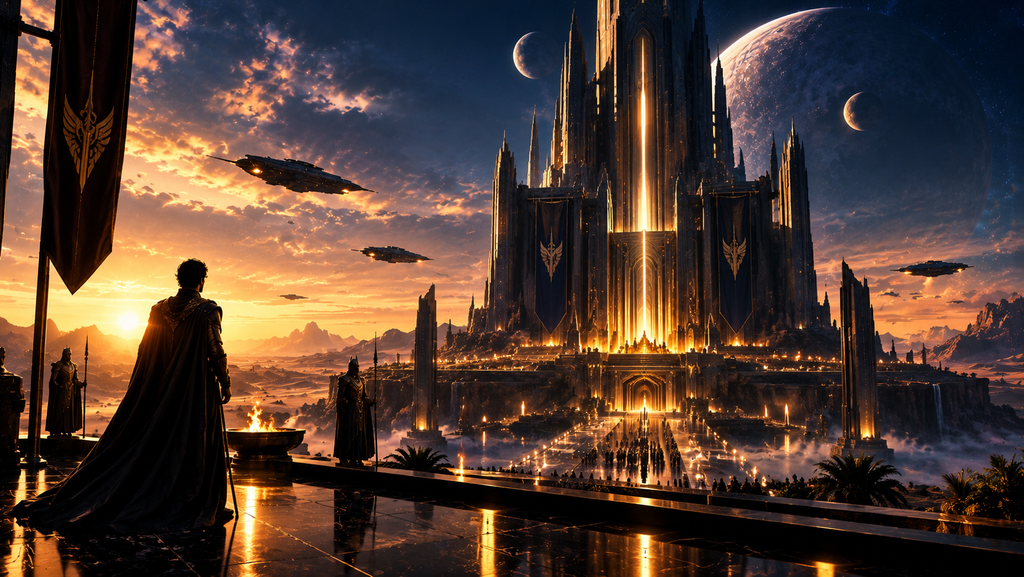
Second, look at the relationship between Paul and Chani. The official synopsis makes Chani central to the mystery, suggesting that their connection will matter to more than the emotional side of the story.
Third, watch for Scytale and the film’s visual treatment of its political conspiracy. The promotional material can provide clues, but it cannot confirm every theory about the character’s intentions.
Trailers are designed to build anticipation, not explain every plot point. The best approach is to use them to identify confirmed details while leaving the film’s biggest questions unanswered.
Dune: Part Three Was Filmed in Abu Dhabi
One notable production detail is the use of Abu Dhabi’s Liwa Desert to portray Arrakis.
The Abu Dhabi Film Commission and Creative Media Authority have published behind-the-scenes information about the production. Their reports describe filming in the Liwa Desert, where the landscape has helped establish the visual identity of Arrakis across the trilogy.
The production’s work in Abu Dhabi included a 31-day shoot in the emirate, including two days in Al Ain, according to the Abu Dhabi Film Commission’s announcement.
This detail matters because the desert environment is more than a backdrop in Dune. The vast dunes and harsh terrain help communicate the scale and isolation of Arrakis, a world whose environment shapes the lives and politics of its inhabitants.
The location also demonstrates how the film combines real landscapes with production design and visual effects to build its science-fiction setting.
Source: Abu Dhabi Film Commission production announcement.
Dune: Part Three Director and Creative Team
Denis Villeneuve returns to direct the third installment and co-wrote the screenplay with Brian K. Vaughan.
The creative team also includes several returning or notable filmmaking talents:
- Denis Villeneuve – Director and co-writer: Leads the film’s overall creative direction.
- Brian K. Vaughan – Co-writer: Collaborates with Villeneuve on the screenplay.
- Linus Sandgren – Cinematography: Responsible for the film’s photographic approach.
- Hans Zimmer – Music: Returns to the world of Dune with its distinctive musical atmosphere.
- Joe Walker – Editing: Shapes the film’s pacing and assembled narrative.
- Patrice Vermette – Production design: Helps create the film’s physical and visual environments.
- Jacqueline West – Costume design: Develops the clothing and visual identities of the characters.
The involvement of this team gives the film continuity with Villeneuve’s earlier work while allowing the story to explore a different stage of Paul’s life.
Is Dune: Part Three the Final Movie?
Yes, it is the conclusion of Denis Villeneuve’s three-film Dune saga, according to the official movie website.

That does not automatically mean it is the end of every possible Dune adaptation or the entire fictional universe created by Frank Herbert. The books continue beyond Dune Messiah, and the broader franchise contains further stories.
For this particular trilogy, however, Dune: Part Three is intended to bring Villeneuve’s cinematic journey to its conclusion.
This distinction is useful for readers searching for the movie’s place in the franchise: the film concludes the director’s trilogy, while the wider Dune universe contains more material than these three movies alone.
Frequently Asked Questions About Dune: Part Three
When does Dune: Part Three come out?
The film is scheduled for December 18, 2026, in North American theaters and IMAX. International releases begin December 16, 2026, with local dates varying by market.
Who plays Paul Atreides?
Timothée Chalamet returns as Paul Atreides, now ruling the Imperium.
Who plays Scytale?
Robert Pattinson plays Scytale, a new and mysterious character connected to the conspiracy surrounding Paul.
What book is Dune: Part Three based on?
The film is based on Dune Messiah, the second novel in Frank Herbert’s Dune series.
Will Zendaya return as Chani?
Yes. Zendaya returns as Chani, who is specifically identified as central to the film’s unfolding mystery.
Is Jason Momoa returning to Dune?
Yes. Jason Momoa is part of the cast as Duncan Idaho.
Where was Dune: Part Three filmed?
The production filmed in several locations, including Abu Dhabi’s Liwa Desert, which represents Arrakis.
Is Dune: Part Three the final film?
It is the concluding installment of Denis Villeneuve’s three-film saga, although the wider Dune universe extends beyond his trilogy.
Can someone watch Dune: Part Three without watching the earlier films?
Newcomers can understand the basic premise from the official synopsis, but watching Dune (2021) and Dune: Part Two (2024) first will provide important context about Paul, Chani, Arrakis, and the political forces behind the story.
Final Thoughts: What Makes Dune: Part Three Worth Watching?
Dune: Part Three brings Paul Atreides to a stage of his journey where gaining power may be easier than living with its consequences. With political conspiracies surrounding the emperor, Chani at the heart of the mystery, and Robert Pattinson joining the cast as Scytale, the film has several storylines that could shape its conclusion.
Its connection to Dune Messiah also points toward a different emphasis from the earlier films: the cost of power, the instability of political control, and the difficulty of protecting people when an entire empire is involved.
The film is scheduled for release in December 2026, and its official trailers and production announcements have already established several important details. What remains uncertain is how these conflicts will ultimately resolve—and what choices Paul will make when his position, his future, and his relationships are all under pressure.
For viewers who enjoy ambitious science fiction, complex political stories, and characters whose victories come with difficult consequences, Dune: Part Three is one of the major films to keep on the radar for 2026.
Official source: Dune: Part Three movie website
Editorial note: This article is a pre-release preview based on official announcements and published promotional material. Interpretations and questions are presented as analysis, not as confirmed plot outcomes. Release dates and local cinema schedules may change.

What happens in Godzilla Minus Zero (2026) when a country that has already lost almost everything is forced to face its worst nightmare once again?
That is the central question behind Godzilla Minus Zero, the highly anticipated sequel to the Oscar-winning Godzilla Minus One. Directed by Takashi Yamazaki, the film returns to postwar Japan in 1949, two years after the events of its predecessor. As the country struggles to rebuild, another Godzilla-related catastrophe threatens to destroy the fragile future its people are trying to create.

But the most interesting question is not simply whether humanity can defeat Godzilla. It is whether people who have already experienced unimaginable loss can find the strength to keep moving forward.
In this guide, we cover the Godzilla Minus Zero release date, returning cast, new characters, story details, latest trailer, IMAX presentation, and the biggest questions surrounding the sequel.
Editorial note: This article distinguishes announced information from interpretation and speculation. Unconfirmed plot details are not presented as facts.
Godzilla Minus Zero Release Date
Godzilla Minus Zero is scheduled to arrive in Japanese theaters on November 3, 2026. The North American release includes special IMAX early-access screenings on November 3, followed by a wide theatrical release on November 6, 2026.
November 3 is an especially meaningful date for the franchise. The original Godzilla premiered in Japan on November 3, 1954, and Godzilla Minus One also opened in Japan on November 3, 2023. The sequel continues that tradition by returning to cinemas on Godzilla Day.
The film’s world premiere took place at the New York Film Festival on September 26, 2026. International release dates may vary, so viewers should check official announcements and local cinema listings for the latest information.
Takashi Yamazaki returns as director and screenwriter, continuing the creative vision behind Godzilla Minus One. He also leads the visual effects work on the sequel, which has been announced as the first Japanese production filmed for IMAX.
What Is Godzilla Minus Zero About?
Set in 1949, two years after Godzilla Minus One, the sequel follows the Shikishima family as Japan attempts to recover from the devastation of war and Godzilla’s previous attack.
The country is beginning to reclaim a sense of normal life when another calamity threatens to undo its progress. The official tagline captures the situation: “War reduced Japan to zero, and Godzilla plunged it into minus.”
The return of Godzilla raises the stakes because the people of Japan already understand the destructive power of the monster. They are no longer facing an entirely unknown danger, but confronting a nightmare they thought they had survived.
The sequel also introduces new characters connected to science and disaster response. These additions suggest that the human effort to confront Godzilla could involve more than military strength alone.
However, the full details of the new attack, the characters’ decisions, and the eventual outcome should not be assumed from promotional footage. Those answers belong to the completed film.
What makes the premise particularly compelling is its historical setting. Japan is attempting to rebuild its communities and restore hope after a devastating period. A new Godzilla attack therefore threatens more than buildings and infrastructure. It threatens the possibility of a future.
What Does the Title Godzilla Minus Zero Mean?
The title Godzilla Minus Zero invites comparisons with Godzilla Minus One, but its complete meaning should not be treated as officially established unless the filmmakers explain it directly.
One possible interpretation comes from the film’s tagline. If war reduced Japan to zero and Godzilla pushed it below that point, the sequel’s title could suggest a struggle to return to a starting position after destruction.
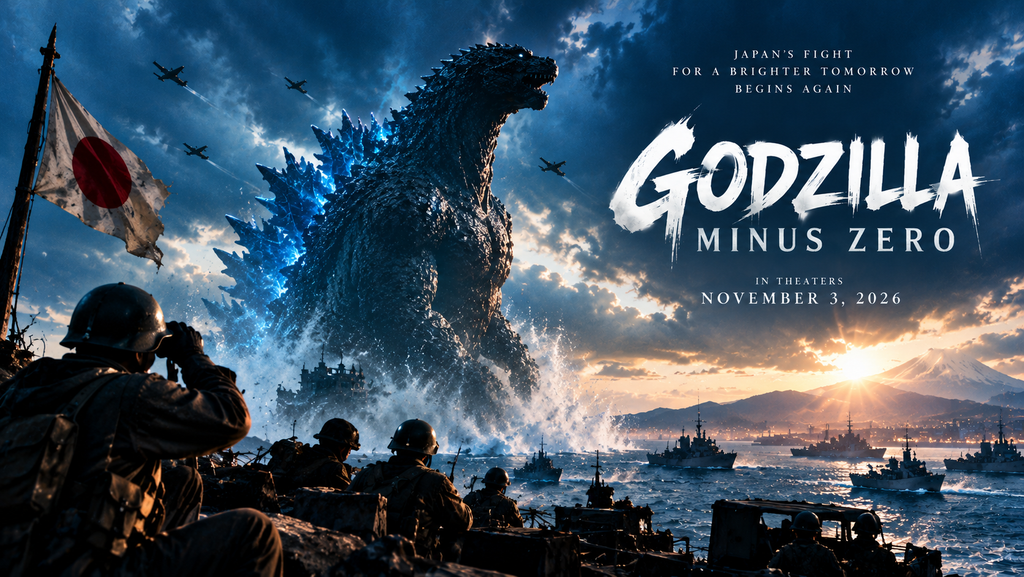
Zero can represent a fresh beginning, but it can also represent the absence of everything a person once had. For a country recovering from war, rebuilding does not necessarily mean returning to the life it knew before.
This interpretation gives the title an emotional dimension. The story may be understood as a struggle between the desire to begin again and the fear that the past will repeat itself.
That is an interpretation of the title rather than a confirmed explanation from director Takashi Yamazaki.
Godzilla Minus Zero Cast and Characters
One of the sequel’s most important advantages is the return of familiar characters from Godzilla Minus One. Their experiences give the new story a connection to the emotional events of the previous film.
Ryunosuke Kamiki returns as Koichi Shikishima, the central character whose experiences of war and Godzilla’s attack shaped the first film. His struggle to protect his family provides an important emotional foundation for the sequel.
Minami Hamabe reprises her role as Noriko Shikishima. Her survival after the previous catastrophe remains an important part of the story’s continuing mystery.
Hidetaka Yoshioka returns as Kenji Noda, who is now associated with the Disaster Response Bureau. His role suggests that the response to Godzilla will involve organised planning and attempts to confront the threat.
Yuki Yamada returns as Shiro Mizushima, while Kuranosuke Sasaki reprises his role as Seiji Akitsu, the captain of the Shinseimaru.
Sakura Ando returns as Sumiko Ota, who runs a local orphanage, and Miou Tanaka reprises his role as Tatsuo Hotta, the former captain of the destroyer Yukikaze.
The sequel also introduces new characters who may provide different perspectives on the crisis.
Min Tanaka plays Kanji Murakami, a biologist described as carrying deep psychological scars from the war. His scientific background could become important to understanding the new threat, although his precise contribution to the story should not be assumed in advance.
Jun Kunimura plays Dr. Ogata, a character featured in the latest trailer. His dialogue about a patient’s survival raises questions about the circumstances surrounding that event.
The new cast and returning characters give the sequel an opportunity to expand its world while maintaining a connection to the people audiences met in the first film.
Godzilla Minus Zero Trailer: What Does It Reveal?
The latest trailer for Godzilla Minus Zero was released in October 2026 and provides another look at the returning monster, the human response, and the mysteries surrounding the new story.

One of the most important details is that Godzilla was not destroyed in the previous film. This establishes a direct connection between the two stories and makes the new threat a continuation of an unresolved danger.
The trailer also highlights the Disaster Response Bureau, suggesting that the authorities are attempting a more organised response. Its precise strategy and eventual effectiveness remain questions for the film.
Another intriguing moment involves Dr. Ogata discussing a patient’s survival. The scene raises questions without revealing every detail needed to understand the situation. Rather than assuming a particular explanation, viewers can treat it as one of the sequel’s central mysteries.
The trailer also showcases Godzilla’s destructive power, including another dramatic heat-ray sequence. These images emphasise the scale of the threat, but they do not reveal how the confrontation ends.
The strongest trailers create anticipation without explaining everything. For Godzilla Minus Zero, the challenge will be turning these visual clues and unanswered questions into a coherent story with a satisfying emotional payoff.
Godzilla Minus Zero and IMAX: Why the Format Matters
Godzilla Minus Zero has been announced as the first Japanese production filmed for IMAX. The production uses IMAX-certified digital cameras and is designed to take advantage of the image and sound presentation available in compatible theaters.
For a film centred on an enormous monster, this format could make the destruction and scale of the environment more immersive. A large screen can emphasise the contrast between Godzilla’s size and the vulnerability of the people caught in its path.
However, technical ambition alone does not guarantee a memorable film. Visual effects are most effective when they support the story and help audiences understand what the characters stand to lose.
The most important question is therefore not simply how impressive Godzilla looks on an IMAX screen. It is whether the presentation makes the audience feel the danger, fear, and consequences surrounding the monster’s return.
Is King Ghidorah in Godzilla Minus Zero?
King Ghidorah is a familiar and popular character in the Godzilla franchise, making speculation about his possible appearance unsurprising.
However, speculation about a roar, a sound effect, or an ambiguous trailer moment is not enough to confirm that the character appears in Godzilla Minus Zero.

Unless Toho or the filmmakers explicitly announce Ghidorah’s involvement, his appearance should be treated as unconfirmed. The confirmed return of Godzilla is not evidence that another famous monster will also appear.
For readers following the film’s development, separating official announcements from fan theories is particularly important. It prevents an exciting possibility from being mistaken for a confirmed plot detail.
Godzilla Minus Zero vs. Godzilla Minus One: What Is Different?
Godzilla Minus One established its story in postwar Japan, following Koichi Shikishima and the people attempting to rebuild their lives after the devastation caused by war and Godzilla.
Godzilla Minus Zero continues that narrative in 1949, two years after the first film. It returns to familiar characters while introducing new figures connected to science and disaster response.
The first film focused heavily on survival, guilt, sacrifice, and the search for a reason to live after catastrophic loss. The sequel has an opportunity to explore what happens when the fragile recovery that followed those events is threatened again.
The two films also share the same director, Takashi Yamazaki, whose combination of visual effects and human drama helped distinguish the original.
The sequel’s IMAX production is another important difference. It demonstrates a technical ambition to present Godzilla on an especially large cinematic scale.
Ultimately, the biggest difference will not be measured by the size of the monster or the number of destruction sequences. It will be determined by whether the sequel develops its characters and story in a meaningful new direction.
Why Expectations Are High for Godzilla Minus Zero
Expectations for Godzilla Minus Zero are high because Godzilla Minus One achieved both commercial success and major critical recognition.
The previous film grossed more than $116 million worldwide and won the Academy Award for Best Visual Effects at the 96th Academy Awards. Its achievement demonstrated that a Japanese Godzilla film could reach a global audience while maintaining a strong emotional focus.
The sequel now faces the difficult task of building on that success without simply repeating the same story.
First, the returning characters need meaningful emotional journeys. Audiences should understand what Koichi and his family are trying to protect, rather than seeing them merely react to another disaster.
Second, the mysteries introduced by the trailers need satisfying answers. An unanswered question can create suspense, but its eventual explanation must make sense within the larger story.
Third, the visual spectacle should serve the narrative. Destruction becomes more powerful when viewers understand its consequences for the people experiencing it.
These are the qualities that could help Godzilla Minus Zero become more than another large-scale monster movie. Whether the finished film achieves them will depend on its storytelling and execution.
Five Questions Godzilla Minus Zero Needs to Answer
The sequel’s premise raises several questions that make it worth following beyond its release date and cast announcements.
Can Koichi Shikishima protect his family without being consumed by his past?
Koichi’s experiences in the first film provide a foundation for exploring the lasting effects of war and the struggle to move forward. A new catastrophe could challenge his determination to build a safer future.
What does Noriko’s survival mean for the story?
The new trailer raises questions about a patient’s survival. How that mystery connects to the wider narrative remains something the film needs to establish.
Can science help humanity understand Godzilla?
The introduction of biologist Kanji Murakami creates an opportunity to explore the scientific side of the threat. Whether his research offers a solution, a warning, or an entirely different perspective remains unconfirmed.
How will Japan respond to another catastrophe?
The Disaster Response Bureau suggests that the authorities will have a role in confronting the new danger. The story could explore the difficult choices involved in protecting a population, although the exact extent of that storyline should not be assumed.
Can the sequel match the emotional impact of Godzilla Minus One?
This may be the most important question of all. Spectacle can attract audiences, but memorable characters and meaningful consequences are what make a monster film stay with viewers after the credits roll.

These questions highlight the sequel’s potential without inventing plot twists or pretending to know the ending.
Godzilla Minus Zero Reviews and Early Reception
The world premiere of Godzilla Minus Zero took place at the New York Film Festival on September 26, 2026. Its theatrical release is scheduled for November, giving audiences the opportunity to experience the film on the big screen.
Any discussion of critical reception should rely on identifiable reviews and a verifiable, current aggregate score.
An earlier draft of this article mentioned a 97% Rotten Tomatoes score based on approximately 35 reviews. That specific figure should not be repeated without checking the current Rotten Tomatoes listing and confirming the number and source of the reviews.
A review score is only a starting point. Readers also benefit from knowing what critics actually praise or criticise, whether they discuss the performances, screenplay, visual effects, or emotional impact.
Until those details are verified against reliable sources, it is better to avoid an exact score than to publish a number that may be outdated or inaccurate.
Frequently Asked Questions
When is Godzilla Minus Zero released?
The Japanese theatrical release is scheduled for November 3, 2026. North American IMAX early-access screenings are scheduled for the same date, followed by a wide release on November 6, 2026.
Is Godzilla Minus Zero a sequel to Godzilla Minus One?
Yes. It takes place in 1949, two years after the events of Godzilla Minus One, and continues the story of the Shikishima family.
Who directs Godzilla Minus Zero?
Takashi Yamazaki returns as director and screenwriter and leads the film’s visual effects work.
Who plays Koichi Shikishima?
Ryunosuke Kamiki reprises the role of Koichi Shikishima, while Minami Hamabe returns as Noriko Shikishima.
Who is Kanji Murakami?
Kanji Murakami is a biologist played by Min Tanaka. Official promotional material describes him as carrying deep psychological scars from the war.
Is Godzilla Minus Zero being filmed for IMAX?
Yes. The film has been announced as the first Japanese production filmed for IMAX, using IMAX-certified digital cameras.
Will King Ghidorah appear in Godzilla Minus Zero?
His appearance should not be treated as confirmed unless Toho or the filmmakers announce it officially.
Is Godzilla Minus Zero worth watching?
The returning cast, postwar setting, new trailer,r and IMAX presentation give fans reasons to be interested. A fair final verdict, however, should consider the completed film and reliable reviews rather than anticipation alone.
Where can I find official Godzilla Minus Zero updates?
The official Godzilla website and the film’s distributor are the best starting points for trailers, release dates,s and confirmed announcements. Regional cinema listings can also help viewers check local screening information.
Final Thoughts
The most compelling thing about Godzilla Minus Zero is not simply that Godzilla is returning. It is that he is returning to a country that has already paid an enormous price to survive him.
Japan is trying to rebuild in 1949. Families are attempting to reclaim ordinary lives, and the country is still dealing with the consequences of war and destruction. Another attack threatens to undo that progress before the wounds have fully healed.
That premise allows the sequel to explore something more meaningful than the scale of its monster: the fragile relationship between survival and hope.
Will Koichi and his family find a way forward? Will the new mysteries deliver satisfying answers? And can Takashi Yamazaki create a sequel that expands the spectacle while preserving the emotional depth of Godzilla Minus One?
Those are the questions worth taking into the cinema.
Godzilla Minus Zero is scheduled to open in Japan on November 3, 2026, with its wide North American theatrical release beginning November 6.
Sources: Official Godzilla announcements, GKIDS theatrical release information, the official global release schedule, and promotional trailer materials. Interpretations of the title and discussion of what the sequel needs to achieve are editorial analysis rather than statements from the filmmakers.

Verity (2026) Movie Review: Cast, Story, Ending, and Box Office Collection

Spider-Man: Brand New Day: Plot, Cast, Characters, the $225M Budget and the $2.52 Billion

Backrooms (2026): Cast, Story, Director, and Everything to Know About A24’s Horror Movie

You Can See Everything (2026): A Review of the Documentary That Lets You Watch Elizabeth Holmes and Decide for Yourself

Street Fighter (2026) Review: A High-Energy Fighting Movie With Iconic Characters

War Machine (2026) Review: An Exciting Military Sci-Fi Action Movie

Verity (2026) Review: A Twisty Thriller I Rated 9/10

Other Mommy (2026) Review: My Honest 7/10 Rating, Cast, Story, Ending Explained & Box Office

Clayface (2026): Release Date, Cast, Story, Trailer, and Early Reviews

Shrek 5 (2027): Release Date, Cast, Story & What to Expect
-
 Action Movies1 month ago
War Machine (2026) Review: An Exciting Military Sci-Fi Action Movie
-
 Hollywood Movies4 weeks ago
Verity (2026) Review: A Twisty Thriller I Rated 9/10
-
 Horror Movies2 weeks ago
Other Mommy (2026) Review: My Honest 7/10 Rating, Cast, Story, Ending Explained & Box Office
-
 Hollywood Movies3 weeks ago
Clayface (2026): Release Date, Cast, Story, Trailer, and Early Reviews
-
 Action Movies4 weeks ago
Shrek 5 (2027): Release Date, Cast, Story & What to Expect
-

 Action Movies3 weeks ago
Project Hail Mary Review: Exciting sci-fi story with a 9/10 rating of Project Hail Mary Review
-
 Action Movies3 weeks ago
Dune: Part Three (2026) – Release Date, Cast, Characters, Story, Trailer & Latest Updates
-

 Action Movies3 weeks ago
Spider-Man: Beyond the Spider-Verse (2027): Release Date, Cast, Characters, and Latest Updates