
Hollywood Movies
Heart of the Beast (2026): Full Movie Review – Rated 9/10

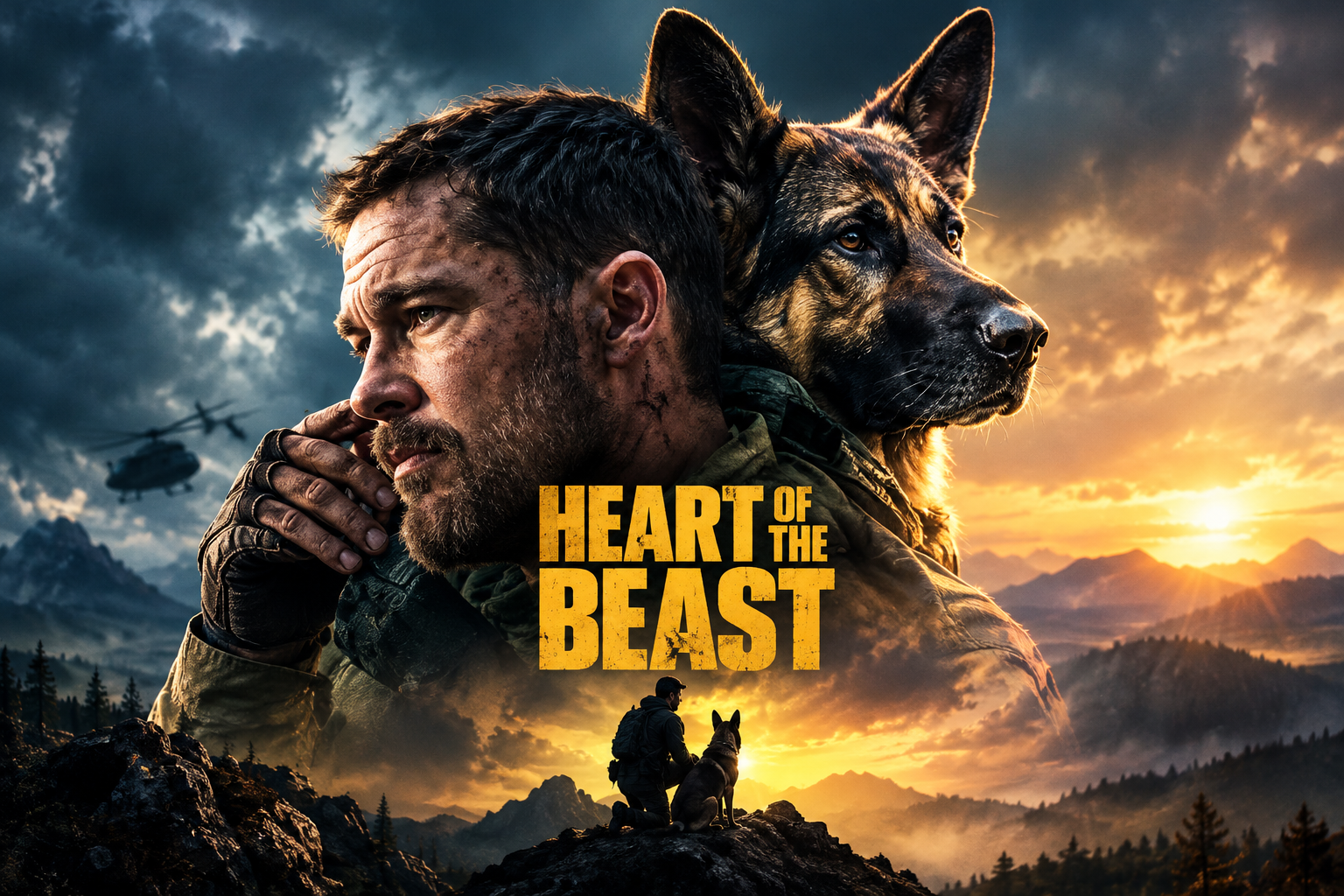
Brad Pitt takes on a dangerous wilderness survival story in Heart of the Beast (2026): Full Movie Review – Rated 9/10, an adventure thriller about a former Special Forces soldier and his loyal military dog fighting to survive after a plane crash. Directed by David Ayer, the film combines harsh wilderness conditions, physical danger, psychological trauma, and the bond between two former combat partners.
What makes this movie interesting is that its central conflict goes beyond surviving in the wild. James Belmont has to face the consequences of his military past while navigating an environment where even his training may not be enough. His dog, Odin, is more than a companion: he is a partner whose instincts and loyalty become essential to the journey.

Released in theaters on September 25, 2026, by Paramount Pictures, Heart of the Beast stars Brad Pitt, J.K. Simmons, and Anna Lambe. With a focused story and a striking wilderness setting, the movie aims to deliver both suspense and emotional depth.
But does the film offer a memorable survival experience, or does it rely too heavily on familiar genre conventions? This detailed review examines the plot, cast, direction, cinematography, dog performances, critical reactions, strengths, weaknesses, and whether Heart of the Beast is worth watching.
Heart of the Beast (2026) Movie Details
- Movie Title: Heart of the Beast
- Release Date: September 25, 2026, in the United States
- Genre: Action, Adventure, Thriller, Drama
- Director: David Ayer
- Writer: Cameron Alexander
- Lead Actor: Brad Pitt
- Supporting Cast: J.K. Simmons and Anna Lambe
- Dog Character: Odin
- Distributor: Paramount Pictures
- Runtime: Approximately 101 minutes
- MPAA Rating: PG-13
- Original Language: English
- Production Companies: Plan B Entertainment, Temple Hill Entertainment, and Wild Chickens Productions
For official information and access to the trailer, visit the Paramount Pictures movie page.
Table of Contents
- What Is Heart of the Beast (2026) About?
- Brad Pitt as James Belmont
- J.K. Simmons and Anna Lambe
- Odin the Dog: The Film’s Most Important Companion
- Story, Survival Challenges, and Plot Development
- David Ayer’s Direction and Filming Locations
- Cinematography, Sound, and Visual Effects
- What Critics Liked About Heart of the Beast
- What Critics Disliked About the Movie
- Heart of the Beast Critics vs. Audience Scores
- Is Heart of the Beast Worth Watching?
- Heart of the Beast Compared With Other Survival Movies
- Frequently Asked Questions
- Final Verdict
What Is Heart of the Beast (2026) About?
Heart of the Beast follows James Belmont, a former Special Forces soldier played by Brad Pitt. After a harrowing plane crash, James and his combat dog, Odin, find themselves stranded deep in the Alaskan wilderness.
Far from civilization, the pair must confront dangerous terrain, harsh weather, injuries, and the unpredictable threats of the natural environment. Their military experience gives them advantages, but wilderness survival demands constant adaptation.
James is also dealing with psychological wounds connected to his past military service. His journey therefore becomes both a physical struggle and a personal confrontation with experiences he cannot simply leave behind.
Odin plays a crucial role in this journey. As a trained military dog and James’s closest companion, he brings instincts and abilities that complement his handler’s training. Their partnership becomes essential as the two try to find a way back to safety.
The official synopsis emphasizes survival, courage, sacrifice, and the bond between the two combat partners. Rather than building the story around a complicated mystery, the film focuses on a straightforward but dangerous objective: making it through the wilderness alive.
This premise gives the film an opportunity to explore how trust works under extreme pressure. James cannot rely entirely on strength or military knowledge, and Odin is not merely a background character. Both are important to the outcome of their journey.
Brad Pitt as James Belmont: A Soldier Facing His Past
Brad Pitt leads the film as James Belmont, a former Special Forces soldier whose training becomes vital after the plane crash.
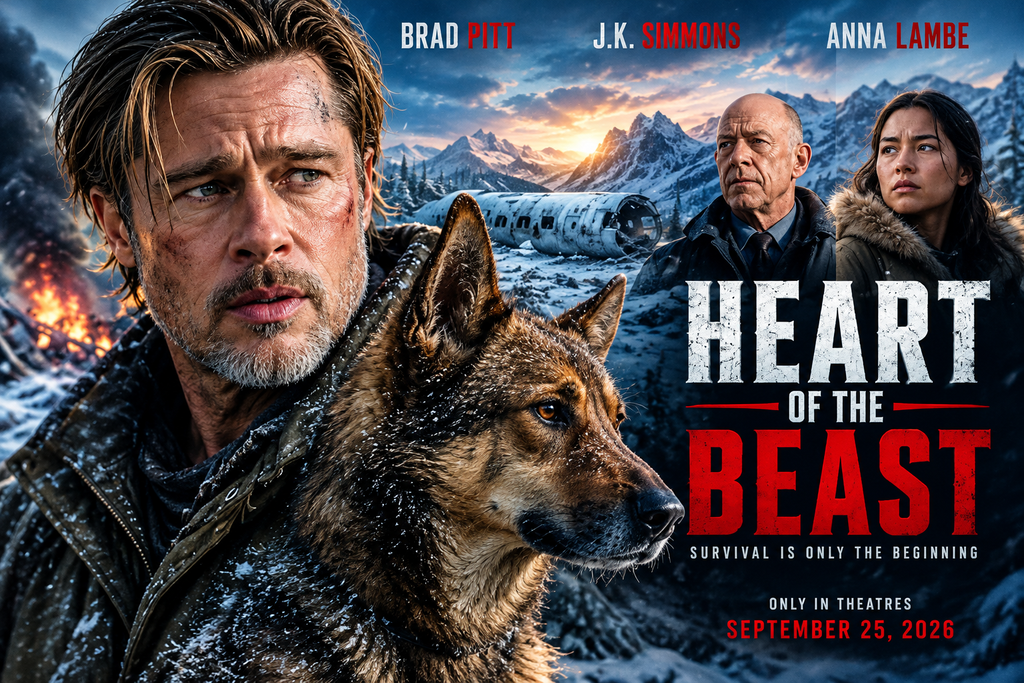
The character is interesting because his military background does not make him invulnerable. James is experienced, but he is also injured, isolated, and affected by the memories of his service.
That combination creates a different kind of action protagonist. Instead of simply defeating enemies, James must conserve his strength, assess risks, and make decisions when his options are limited.
Pitt’s performance is particularly important during the quieter moments. A survival film can lose emotional impact if its lead character becomes little more than a person moving from one obstacle to another. James’s history gives the struggle a deeper context.
In its September 24, 2026 review, The New York Times noted Pitt’s quiet confidence and the way his performance draws attention toward James’s relationship with Odin. The review also discussed the character’s flashbacks to his experiences in Iraq and Afghanistan.
Read the New York Times review of Heart of the Beast.
For viewers who enjoy character-driven action films, James’s psychological struggle adds another layer to the wilderness adventure. His challenge is not just to reach civilization but to keep going when physical pain and difficult memories make the journey harder.
J.K. Simmons and Anna Lambe: Supporting Characters
The supporting cast includes J.K. Simmons as Watkins and Anna Lambe as Amber.
Their presence expands the story beyond its central human-and-dog partnership. In a survival film with a relatively focused premise, supporting characters can introduce new perspectives and help connect the protagonist’s personal struggle with the wider world.
Simmons is a familiar presence in Hollywood films, while Lambe brings another important character into the film’s narrative. However, the principal emotional focus remains on James and Odin.
The story’s effectiveness depends on keeping these supporting elements connected to the main journey rather than allowing them to distract from its central survival conflict.
Odin the Dog: Why the Canine Performance Matters
One of the most distinctive aspects of Heart of the Beast is its focus on Odin, James’s military working dog.
Odin is essential to the premise because the film treats the dog as a partner with his own instincts and responses. Their relationship is built around familiarity, trust, and shared experiences rather than simple affection.
The production also faced a practical challenge: according to Indonesia’s Film Censorship Institution, four different dogs were used to portray Odin, with each performing a different role. The film’s remote wilderness sequences were shot partly on New Zealand’s South Island, with some locations accessible only by helicopter.
This behind-the-scenes detail helps explain the coordination required for a production that depends so heavily on animal performance and difficult outdoor locations.
Read the film information from Indonesia’s Film Censorship Institution.
The canine performance received attention from professional critics as well. Sight and Sound, published by the British Film Institute, praised the dog’s expressive reactions and the filmmaking techniques that make its interactions with Pitt meaningful.

Read the BFI review of Heart of the Beast.
For viewers who enjoy animal-centered dramas, Odin is one of the film’s strongest attractions. The relationship also gives the survival story emotional stakes: the characters are not simply trying to escape danger but trying to protect each other.
Story, Survival Challenges, and Plot Development
The central plot of Heart of the Beast is built around a familiar survival question: how can someone return to safety when almost everything around them is working against them?
James and Odin face a series of physical challenges that test their endurance and decision-making. The wilderness creates danger through its weather, terrain, wildlife, and isolation.
James’s injuries make these challenges more complicated. Even a relatively simple obstacle can become serious when someone has limited mobility and few supplies.
The story also uses James’s military background to create tension between preparation and unpredictability. Training can help someone respond to danger, but it cannot guarantee control over every situation.
One of the film’s strengths is its clear objective. The audience understands what the characters need to do, allowing the story to concentrate on how they respond to each new challenge.
However, a straightforward premise also creates a risk. If the obstacles begin to feel repetitive or too predictable, the tension may weaken. Survival movies need to keep their situations varied while making the consequences of failure believable.
The film’s emotional dimension helps provide another source of interest. James’s past and his relationship with Odin give the journey meaning beyond simply reaching a destination.
Spoiler-free assessment: The premise is easy to understand, but its appeal depends on how effectively the film balances physical danger with character development.
David Ayer’s Direction and the Return to a More Personal Story
David Ayer directs Heart of the Beast, reuniting with Brad Pitt after they collaborated on Fury (2014).
That earlier film explored the experiences of soldiers during World War II. Heart of the Beast approaches military experience from a different angle, focusing on a former soldier who must survive outside the structures and support systems of military life.
Ayer’s involvement is an important point for viewers interested in his filmography. The survival setting allows the director to explore tension, physical hardship, and the emotional consequences of violence without relying exclusively on large-scale combat.
The screenplay was written by Cameron Alexander. Its central relationship provides the story with a clear emotional direction, while the wilderness creates the external conflict.
The film is not entirely original in its use of survival-thriller conventions. Nevertheless, the combination of a former soldier, a combat dog, and psychological trauma provides a specific identity for the story.
For more background, Paramount published an article featuring Brad Pitt, J.K. Simmons, and David Ayer discussing the bond at the center of the film.
Read Paramount’s behind-the-scenes feature on Heart of the Beast.
Cinematography, Sound, and Visual Effects
The film uses New Zealand’s South Island to represent the remote Alaskan wilderness. This location provides dense forests, expansive landscapes, and difficult terrain that support the story’s sense of isolation.
Cinematography is particularly important in survival films because the environment becomes part of the conflict. Wide shots can emphasize the characters’ vulnerability, while closer framing makes injuries and exhaustion feel more immediate.

The film’s sound design also contributes to its atmosphere. Wind, water, footsteps, and Odin’s breathing can communicate danger and create moments of tension without requiring additional dialogue.
The visual effects are less consistently successful, according to some published reviews. The BFI review, for example, criticized the appearance of a computer-generated bear in one sequence, even while praising other suspenseful moments.
This illustrates an important distinction: impressive scenery does not automatically make every effect convincing. A survival film must make its threats feel believable, especially when animals or environmental dangers are central to the action.
When the landscape, sound, performances, and editing work together, they can create an immersive experience. When a visual effect looks artificial, it can briefly weaken that illusion.
What Critics Liked About Heart of the Beast
Published reviews identify several strengths in the film, particularly Brad Pitt’s performance, the relationship between James and Odin, and the handling of selected survival sequences.
The New York Times review praised Pitt’s restrained approach and the attention given to his character’s relationship with the dog.
The BFI’s Sight and Sound review highlighted Odin’s expressive performance and described the film as an effectively executed man-and-dog survival story. It also praised particular sequences for their physical intensity.
Meanwhile, the San Francisco Chronicle described the movie as a stripped-down survival thriller that finds emotional weight in the relationship between its central characters.
Read the San Francisco Chronicle review.
These reviews point to a consistent positive: the film’s emotional center gives its survival premise more weight than the external dangers alone might provide.
The movie also benefits from its focused setup. Rather than following numerous competing storylines, it concentrates on the relationship between one man and his dog.
What Critics Disliked About Heart of the Beast
The film’s most noticeable weaknesses concern familiar genre conventions, certain visual effects, and the way some dramatic moments are presented.
The BFI review suggests that parts of the survival story feel conventional. It also criticizes the use of overly emphatic music in moments where silence might have created a stronger atmosphere.
The New York Times review raises a different concern about the film’s military-dog premise, questioning the uncomfortable idea of training a young animal for dangerous combat service.
These criticisms show that the movie’s emotional appeal does not necessarily resolve every question raised by its story.
Some viewers may find its survival situations engaging, while others may prefer a more original plot or more consistently realistic effects. The use of flashbacks and dramatic music may also work better for some audiences than for others.
The film’s greatest strength and its main limitation are closely connected: its focused storytelling keeps the relationship at the center, but it also means that viewers looking for a complex mystery or a radically different survival narrative may find the premise familiar.
Heart of the Beast Critics vs. Audience Scores
Review aggregators provide another way to understand how the movie has been received.
At the time of checking, Rotten Tomatoes’ listings showed approximately 85% from critics and around 91% from audiences in its current movie guide. These figures can change as more reviews and audience ratings are collected.

Source: Rotten Tomatoes — Heart of the Beast.
The figures suggest a positive overall reception, with the audience score higher than the critics’ score in the listing checked. However, an aggregate percentage is not the same as an average rating out of 10.
Individual reviews also reveal why reactions differ. Critics who value character relationships and restrained performances may respond positively, while viewers who expect a highly original plot or consistently realistic visual effects may be more critical.
For a balanced assessment, it is useful to consider both the scores and the reasoning behind them rather than treating a single percentage as the final word.
Heart of the Beast Compared With Other Survival Movies
Heart of the Beast shares elements with several well-known survival films, but its relationship between a soldier and his dog gives it a distinct emotional focus.
The Revenant (2015)
Both movies place characters in dangerous natural environments where physical endurance is essential. However, The Revenant emphasizes revenge and an individual struggle against extreme hardship, while Heart of the Beast places greater emphasis on the partnership between James and Odin.
The Grey (2011)
Both films explore human vulnerability in a harsh wilderness setting. The Grey focuses heavily on a group of survivors confronting danger and existential questions, while Heart of the Beast builds its central conflict around one man and his canine companion.
I Am Legend (2007)
Both stories use the bond between a human protagonist and a dog to add emotional weight to a survival narrative. Their settings and storylines differ, but both demonstrate how an animal companion can become central to the protagonist’s emotional world.
These comparisons are useful for understanding the film’s genre, but they do not mean the movies share the same plot or themes in every respect.
Is Heart of the Beast Worth Watching?
Heart of the Beast is worth considering if you enjoy wilderness survival stories, Brad Pitt’s performances, and films about loyalty between humans and animals.
Its most appealing elements include:
- A straightforward survival premise with clear stakes.
- Brad Pitt’s portrayal of a soldier dealing with physical and psychological hardship.
- Odin’s central role in the emotional story.
- Remote landscapes that reinforce the characters’ isolation.
- A combination of adventure, suspense, and personal drama.
The main reservations concern familiar survival conventions and visual effects that some critics found less convincing.

If you primarily want nonstop action or an unusually complicated plot, the film may not be the ideal choice. If you prefer survival adventures that give their central relationship meaningful attention, it has more to offer.
Frequently Asked Questions
What is Heart of the Beast (2026) about?
The film follows former Special Forces soldier James Belmont and his combat dog, Odin, after a plane crash leaves them stranded in the Alaskan wilderness. They must use their training and instincts to survive and find a way back to safety.
Who stars in Heart of the Beast?
The principal cast includes Brad Pitt as James Belmont, J.K. Simmons as Watkins, and Anna Lambe as Amber.
Who directed Heart of the Beast?
David Ayer directed the film, and Cameron Alexander wrote the screenplay.
When was Heart of the Beast released?
The movie was released in US theaters on September 25, 2026.
How long is Heart of the Beast?
Its listed runtime is approximately 101 minutes, or 1 hour and 41 minutes.
What is the age rating for Heart of the Beast?
The film is rated PG-13 in the United States for material including violence, peril, bloody or injury-related images, and some language.
Is Heart of the Beast based on a true story?
The official synopsis presents the movie as an adventure thriller. The sources cited here do not identify it as a direct retelling of a specific true story.
Is Heart of the Beast a horror movie?
It is primarily an action-adventure survival thriller with dramatic elements rather than a traditional horror film. Its tension comes from isolation, injury, wilderness dangers, and uncertainty.
Where can I watch the Heart of the Beast trailer?
Visit the official Paramount Pictures page for the movie’s official information and trailer access.
Final Verdict on Heart of the Beast (2026)
Heart of the Beast combines Brad Pitt’s star presence with a focused survival story about a former soldier and the military dog who remains by his side. The Alaskan wilderness provides the physical challenge, while James’s past and his relationship with Odin give the journey emotional weight.
The film’s strongest moments appear to come from the partnership between its two central characters. Published reviews have praised Pitt’s restrained performance, Odin’s expressive presence, and several effectively staged survival sequences. At the same time, familiar genre elements and certain visual effects prevent the movie from being equally successful in every area.
For viewers who enjoy emotional adventure films, wilderness survival stories, and the bond between people and animals, Heart of the Beast is worth considering. It may not reinvent the genre, but it offers a clear emotional focus and an accessible survival premise.
Final recommendation: Consider Heart of the Beast if you want a survival thriller that combines physical danger with a story about trust, resilience, and loyalty.
Personal rating: Add your own rating after watching the film and evaluating its performances, story, pacing, and overall impact: 10/9

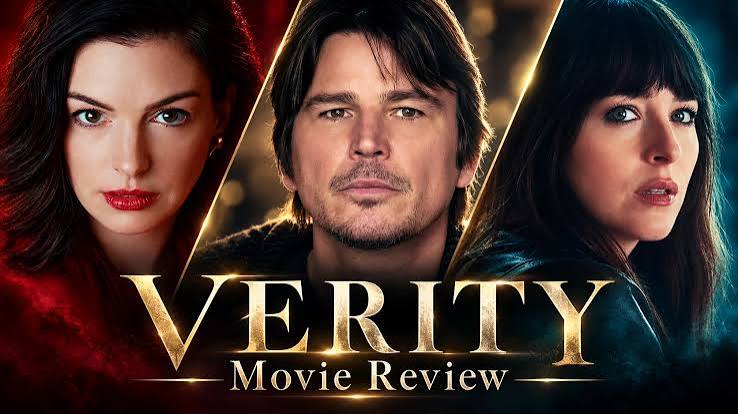
Verdict: 7/10. A gripping, Verity (2026) uncomfortable thriller with a standout Anne Hathaway, held back by uneven pacing and an ending that withholds too much.
Quick Facts
- Release date: October 2, 2026, from Amazon MGM Studios; rated R, runtime 1h 54m, boxofficewatch
- Genre: Psychological thriller / mystery
- Based on: Colleen Hoover’s bestselling novel
- Main cast: Anne Hathaway (Verity), Dakota Johnson (Lowen), Josh Hartnett (Jeremy)
- My rating: 7/10
My Viewing Experience
I watched Verity at home on my laptop and hadn’t read the book. I expected a dark thriller with twists, and I wanted to see how the filmmakers would handle Hoover’s story. Going in blind helped. I formed my own theories about who was lying, and the film kept overturning them.
The Story (Spoiler-Free)
Lowen Ashleigh enters the Crawford household and finds herself tangled in a web of family secrets. She struggles to separate fiction from reality, and her growing closeness to Verity’s husband, Jeremy, complicates things further.
What hooked me was the film’s habit of making me doubt what I’d just learned. Whenever I thought I understood the situation, a new detail made me look at the characters differently. The discovery of the hidden manuscript was the moment I leaned in hardest. It changed how I saw both Verity and Jeremy, and I wanted the truth even more.
Performances
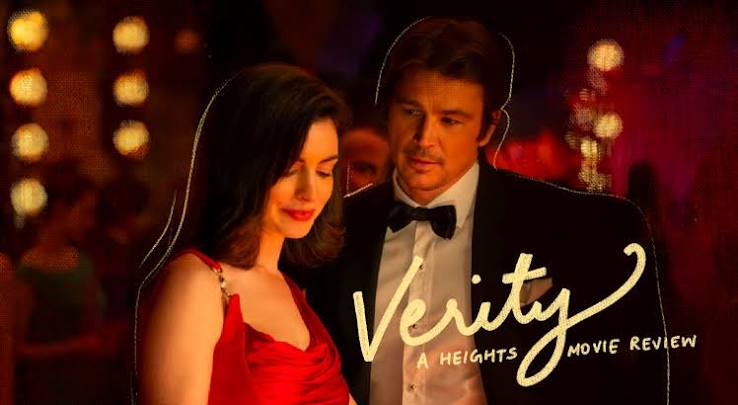
Anne Hathaway is the reason to watch. Her Verity is strange and hard to read, and her presence creates tension even when she barely speaks. I kept watching closely whenever she appeared.
Josh Hartnett makes Jeremy both charming and mysterious. You’re never sure how far Lowen, or you, should trust him.
Dakota Johnson captures Lowen’s confusion and curiosity well, though a few of her emotional moments could have hit harder.
My loyalties shifted as I watched. I started on Lowen’s side because she was trying to understand the family. The more she uncovered, the less certain I became about who was telling the truth. That shifting trust is the film’s best quality.
Direction, Atmosphere, and Pacing
The film builds an uneasy mood, especially inside the Crawford home. Lighting, shadows, and close-ups make ordinary moments feel suspicious, and the music adds tension. The pacing sags in a few places, and some scenes could have been shorter.
Watching on a laptop suited it. The quiet scenes pushed me to focus on dialogue, expressions, and small details.
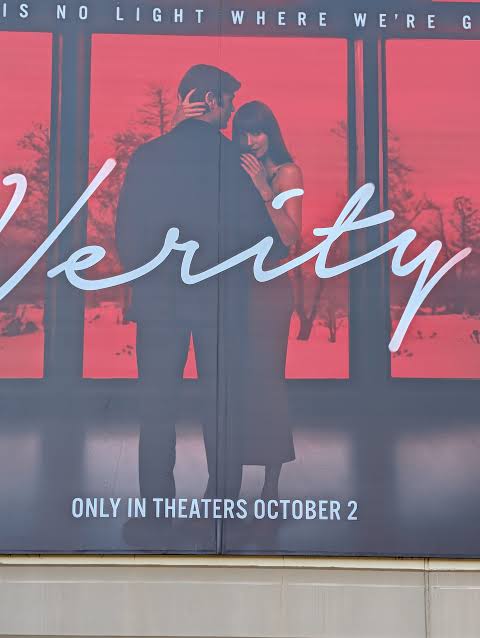
How it compares: Verity shares secrets, trust, and unreliable characters with Gone Girl and The Girl on the Train. Gone Girl is the more carefully constructed film. Verity leans on psychological discomfort and lingering uncertainty. It has the atmosphere, but the storytelling could be tighter.
The Ending
I found it interesting but not fully satisfying. It leaves room for doubt, which makes it memorable, but I wanted clearer answers about the characters’ real intentions. If you need every thread tied up, this may frustrate you.
Tip for first-time viewers: Pay attention to dialogue and small details, don’t rush to trust anyone, and avoid spoilers beforehand.
Box Office Collection
- Production budget: about $40 million the-numbers
- Opening weekend: it took the No. 1 spot in North America with $32.6 million, continuing the streak of Colleen Hoover adaptations at the box office wral
- Worldwide total: about $162.7 million as of late October, roughly four times the budget
Its second weekend was rougher. The domestic weekend fell about 64% from the opening. The critical reception was weak. It earned a C+ CinemaScore and a 33% critics’ score on Rotten Tomatoes, yet the box office held up. One report said the opening landed below expectations, though it still finished first. Verity Worldwide Box Office: Crosses $100M Milestone +2
How it stacks up against other Hoover films: It Ends With Us remains the biggest Hoover adaptation by far, at $351.4 million worldwide in 2024. Verity did not come close to that, but it comfortably cleared its budget. screendaily
Why it worked commercially: I think it came down to the popularity of the novel, a recognizable cast, and the mystery that drew curious viewers. It shows a film can succeed commercially even when critics and audiences disagree about its quality.
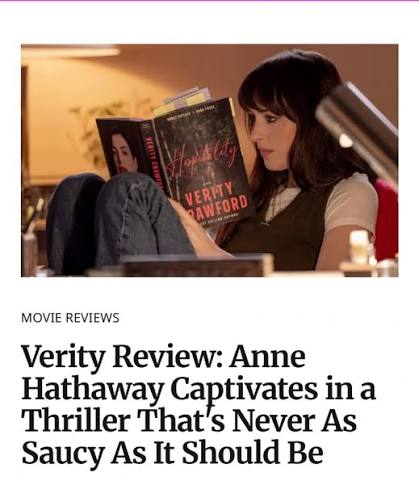
Who Should Watch It?
Watch it if you like: psychological thrillers, family secrets, mysterious characters, dark adaptations of popular novels, and stories that keep you guessing.
Skip it if you prefer: fast-paced thrillers, clear answers, and carefully explained endings.
Final Verdict: 7/10
Hathaway’s performance and the unsettling atmosphere make it worth watching. The pacing and some story choices keep it from being great.
Horror Movies
Backrooms (2026): Cast, Story, Director, and Everything to Know About A24’s Horror Movie

My interest in the Backrooms started the way it did for many people: through viral internet videos. The mysterious yellow rooms, the empty corridors, and the strange feeling of a place that shouldn’t exist pulled me in. So when A24 turned it into a full-length movie, I had one big question: could an internet horror concept built on short videos and unanswered questions really work as a feature film?
After watching Backrooms (2026), my answer is mostly yes. What stayed with me wasn’t a jump scare. It was the feeling of being trapped somewhere that doesn’t follow any normal rules.
In this Backrooms (2026) movie review, I cover the story, cast, and director, then break down what works, what doesn’t, and where to watch it. Updated October 2026: the film is now streaming. Details are in the “Box Office and Where to Watch” section.
Backrooms (2026) at a Glance
- Genre: Horror and sci-fi.
- Release date: May 29, 2026, in U.S. theaters, from A24. soapcentral
- Runtime: 110 minutes. the-numbers
- Age rating: Rated R for language and some violent content/bloody images. the-numbers
- Director: Kane Parsons.
- Screenwriter: Will Soodik, based on Parsons’ YouTube series. screendaily
- Main cast: Chiwetel Ejiofor, Renate Reinsve, Mark Duplass, Finn Bennett and Lukita Maxwell. Deadline
- Production companies: A24, Atomic Monster, 21 Laps and Phobos, with co-financing from Chernin Entertainment. Deadline
What Is Backrooms About?
A24 has kept the plot close to the chest. The official synopsis says a strange doorway appears in the basement of a furniture showroom. From there, the film follows furniture store owner Clark and his therapist, Mary, as they discover a dimension of seemingly endless liminal spaces. The idea began as a 4chan creepypasta before Parsons turned it into a viral video series. BACKROOMS (2026) +2
I won’t spoil anything here. As someone who followed the online lore, I appreciated that the film adds character development and a clearer narrative without losing the unsettling identity that made it popular online. I didn’t want a straight recreation of the YouTube series, and I was glad it tries to expand the mythology rather than repeat familiar ideas.
Who Directed Backrooms?
The director is Kane Parsons, also known as Kane Pixels, the YouTuber and VFX artist behind the original series. He became A24’s youngest-ever director, and this is his feature debut. James Wan’s Atomic Monster is among the film’s producers. fangoria
Backrooms Cast
A24’s billing lists Chiwetel Ejiofor, Renate Reinsve, Mark Duplass, Finn Bennett, and Lukita Maxwell. Ejiofor plays Clark and Reinsve plays his therapist, Mary. Avan Jogia is also in the cast, having joined alongside Duplass, Bennett, and Maxwell in July 2025 casting news. filmstories
Backrooms (2026) Movie Review
Direction: From YouTube Series to Feature Film
The hardest part of this adaptation was making a feature that doesn’t feel like a stretched-out short, and critics say Parsons mostly manages it. The film opens in found-footage style. Collider noted that the first ten minutes or so look like a ’90s camcorder recording, but that the film doesn’t stay in that format. The Prague Reporter said it quickly pivots to crisp digital cinematography and two tangible central characters. colliderpraguereporter
Deadline picked up a strong David Lynch influence and still judged the finished film to be its own thing. Screen Daily praised Parsons for avoiding the temptation to overcomplicate things and sticking to a stripped-back aesthetic. That restraint is the key directorial choice here. Deadlinescreendaily
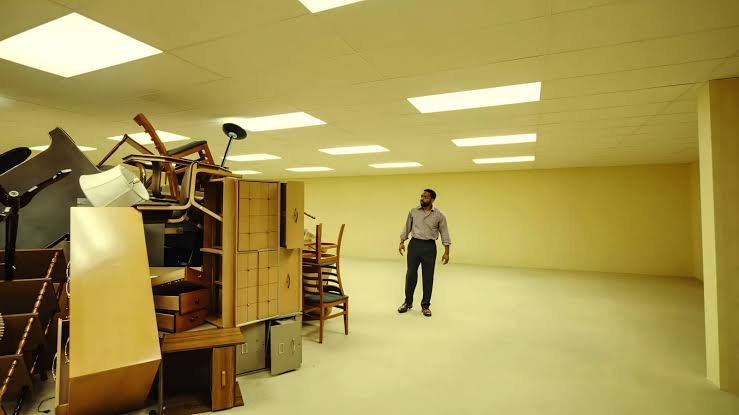
Visuals and Production Design
The yellow rooms and empty corridors are the film’s signature, and a small team shaped them. The credits list Jeremy Cox as cinematographer, Greg Ng as editor, and Danny Vermette as production designer. Deadline also credited VFX supervisor Edward Douglas. Screen Daily argued that much of the creeping dread comes from the emptiness, from what is not there. In a film built on absence, framing and editing carry as much weight as any monster design. boxofficemojoscreendaily
Sound Design
If the visuals show you the space, the sound tells you it isn’t safe. Deadline called the sound design exceptional and highlighted an electronic score by Parsons and Edo van Breemen alongside constant noises that hint at what lies behind the walls and doors. The film pairs those noises with quiet, which makes the silences feel active rather than empty. Deadline
Performances
Ejiofor and Reinsve are the human anchor in a film full of space, and critics agree on that. Screen Daily described them as two sides of the same coin: he is impulsive, angry, and selfish; she is repressed, logical, and caring. The Prague Reporter said the two bring an emotional grounding most high-concept horror lacks, with Ejiofor showing mounting desperation and Reinsve finding depth in Mary’s quiet empathy. Collider added that Reinsve’s and Ejiofor’s performances improve as the movie goes on, though it found Clark’s motivations a little confusing. ‘Backrooms’ review: Chiwetel Ejiofor and Renate Reinsve lose themselves in creepy, slow-burn horror +2
Story and Character Depth
The story reaches for more than a simple creature feature. Screen Daily said the leads’ different reactions to the backrooms push the screenplay’s cerebral ideas of memory, trauma, and identity. The weakness is depth. The Prague Reporter noted that the script leaves certain aspects underdeveloped, and the AU Review critic said the leads compensate for slow pacing and purposefully vague characterizations. I felt the same gap: I wanted to understand the characters’ motivations better, and how the strange environment changed them. ‘Backrooms’ review: Chiwetel Ejiofor and Renate Reinsve lose themselves in creepy, slow-burn horror +2
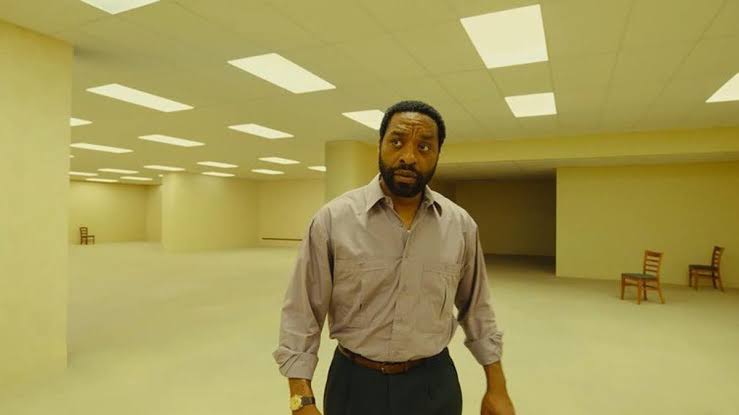
Originality: What the Film Adds
Longtime fans will recognize the unsettling look, but the film adds two things. It puts human characters inside the space: a therapist and a patient who experience it differently. And it leaves room for interpretation, leaving the film open to interpretation and, it seems, the door open for more. Parsons has said he’s interested in expanding the Backrooms universe, though no new installment has been announced. screendailycomingsoon
Atmosphere vs. Scares
So is this a scary movie or an atmospheric one? Mostly atmospheric. Variety’s Owen Gleiberman wrote that “Parsons wrings true terror out of the sense of being enclosed.” That’s the kind of fear on offer: dread built from space and uncertainty rather than constant shocks. It is still rated R for language and some violent content/bloody images, so it isn’t bloodless. rottentomatoesthe-numbers
Critical Reception
Reviews are strong but not unanimous. Rotten Tomatoes showed 87% on the Tomatometer across 302 reviews, which means a minority of critics weren’t won over. The score changes over time, so check the live page. apple
The Scene That Sold Me
All of that craft comes together in the scene that stayed with me most. The characters find themselves surrounded by endless, nearly identical yellow rooms. At first, everything looks ordinary. But the longer the camera stays, the more uncomfortable it gets. The lighting feels artificial, the empty corridors seem to stretch forever, and the background sound tells you something is wrong even when nothing is happening.
I caught myself studying the edges of the frame, wondering what might appear next. That’s the film’s trick: tension from atmosphere and uncertainty rather than jump scares.
What Worked and What Didn’t
What worked: the atmosphere. Empty spaces, silence, and uncertainty do most of the heavy lifting, and it feels different from the usual horror formula. I left thinking about the world and its mystery, not just the scary moments.

What didn’t: the pacing, in places. A few stretches felt longer than the mystery needed. I also wanted more development for some characters, especially their motivations and how the strange environment affected them. Still, I wouldn’t want it turned into a conventional horror movie. Its unusual atmosphere is its identity.
Who Should Watch It (and Who Should Skip It)
Watch it if you like: psychological horror, found-footage filmmaking, and mysterious stories that leave room for interpretation.
Skip it if you want: constant action, fast pacing, or frequent jump scares. This one pulls you in slowly.
Box Office and Where to Watch
Backrooms opened in U.S. theaters on May 29, 2026, and it was a hit. It earned $81 million domestically in its opening weekend and $118 million worldwide. It crossed $100 million domestically in six days, becoming A24’s highest-grossing domestic release. Its final worldwide total was reported at $396.5 million. ‘Backrooms’ Movie Breaks Box Office Records for A24; Streaming Release Details +2
You no longer have to wait for it. The film is already streaming. It arrived on HBO Max in the United States on September 25, 2026, and debuted on the HBO channel on Saturday, September 26, at 8:00 PM ET. It is also on HBO Max in Spain. Before that, it was available to buy or rent digitally on Apple TV, Fandango at Home, and Prime Video. Availability varies by country, so check your local HBO Max or rental listings. Backrooms Streaming Release Date Officially Confirmed After $396M Box Office Smash +2
A separate cut, Backrooms: Everything Must Go Edition, played theaters in July. It was a one-week-only run with 15 extra minutes of theatrically exclusive post-credit bonus footage from Parsons. I couldn’t confirm whether that version is available to stream, so check the listing if you want it. icfilmscene
My Tips for Watching
- Bigger is better, but home works too. The visuals, strange spaces, and sound design are a big part of what makes the film interesting. If you can still find a theater showing, the big screen is where it works best. At home, it suits viewers who like to take their time with a mystery.
- Don’t try to decode every piece of lore. Go in with an open mind and let the film introduce its world naturally.
- Watch the background. Pay attention to the lighting and the quiet moments between big events. The smallest visual details often build more dread than an obvious scare.
- Bring curiosity, not a checklist. Expecting a conventional horror movie will work against you.
Final Verdict
Backrooms answers the question I came in with: yes, an internet horror concept built on short videos can work as a feature film. It does so by trusting its strengths: a restrained director, strong production design and sound, and two lead performances that give the emptiness something human to react to. It also leaves you with ideas about memory, reality, and identity instead of a checklist of scares.
It isn’t flawless. The pacing sags in places, and some characters never get the depth their situation deserves. But those flaws feel like the cost of a film that chose mood over formula, and I’d rather have that than a conventional horror movie. If you enjoy psychological horror and slow-burn mystery, it’s well worth your time, and it’s easy to watch now on HBO Max in the U.S. If you want fast pacing and constant jump scares, this isn’t the film for you.
My rating: [10/7.5]
Hollywood Movies
You Can See Everything (2026): A Review of the Documentary That Lets You Watch Elizabeth Holmes and Decide for Yourself

Rating: 7.5/10
The Theranos story has been told many times, so I wasn’t sure what another take could add. What pulled me toward You Can See Everything was a combination of two things: Elizabeth Holmes herself, and Nathan Fielder’s involvement. Fielder is not a name you associate with the usual true-crime formula, and that alone made me curious about how this documentary would handle a story most of us already know.
First Impressions: A Documentary That Doesn’t Behave Like One
For the first ten minutes or so, I was still trying to work out what I was watching. The style felt different from a typical documentary, and I wasn’t sure which direction it was heading. That uncertainty turned out to be a good thing. Instead of settling into a familiar rhythm of talking heads and archive footage, the film made me pay attention and wait to see where it would go.
What Stayed With Me: Public Image vs. Private Life
The idea I kept coming back to after the film ended was the gap between someone’s public image and their private life. The moments that stuck with me most were the ordinary ones, where Holmes is simply having everyday conversations. Knowing her background, even those casual interactions felt unusual, and that tension is where the film is at its most interesting.
The filmmaking choices support this. The documentary doesn’t always tell you what to think. It lets you watch, then form your own opinion. That restraint made some moments far more memorable than a narrator explaining them ever could.
How It Compares to The Inventor and The Dropout
If you’ve seen The Inventor or The Dropout, you’ll notice a clear difference in focus. Those projects spend their time building the business story and examining the evidence behind the scandal. You Can See Everything is far less interested in explaining Theranos and far more interested in Holmes as a person.
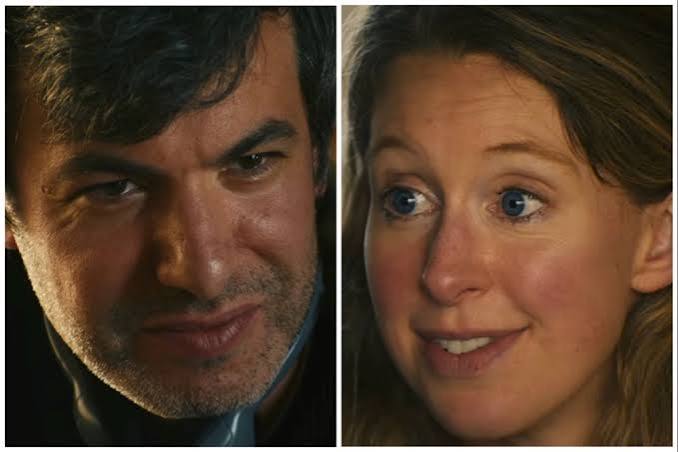
I found that refreshing. Its observational approach, rather than a standard true-crime structure, makes an already familiar story feel new. That is its biggest strength. The trade-off is that viewers who want a detailed investigation may find it less satisfying, because this isn’t that kind of film.
Nathan Fielder’s Influence
Fielder’s involvement made a noticeable difference. His unconventional approach brings an uncomfortable but fascinating atmosphere to the film. His style works because it lets situations speak for themselves rather than pushing a particular opinion on the audience.
There were moments when his approach felt unusual, but I never felt it distracted from the main subject. If anything, it gave the film a distinct identity, which is hard to achieve when you’re covering a story this well-trodden.
Did It Change My View of Elizabeth Holmes?
Not completely, but it shifted my perspective. I already knew the Theranos scandal, so the most interesting part for me was seeing how she presents herself outside the usual media coverage. The film doesn’t overturn what you know. It adds a different angle on it.
Where It Falls Short
The pacing is the main weakness. A few scenes moved slower than necessary, and some of them could have been edited more tightly. It’s not enough to ruin the experience, but it is the reason the film doesn’t score higher from me.
Who Should Watch It (and Who Should Skip It)
Watch it if you:
- Enjoy documentaries about real-life scandals and controversial personalities
- Are interested in the psychology behind public image
- Already know the Theranos story and want a different perspective on Holmes
Skip it if you:
- Want a fast-paced investigation with lots of new revelations
- Prefer clear, guided storytelling over observational filmmaking
Its slower pace and unusual storytelling approach won’t appeal to everyone, and that’s worth knowing before you press play.
Final Verdict: 7.5/10
You Can See Everything earns its 7.5 through its filmmaking style, Nathan Fielder’s involvement, and an unusual level of personal access. It loses a few points because the pacing could have been tighter. Overall, it’s a distinctive documentary that offers something different from the usual corporate-scandal stories, and for viewers who are open to its approach, it’s well worth the time.
Have you seen it? Share your thoughts and your own rating in the comments below.

Verity (2026) Movie Review: Cast, Story, Ending, and Box Office Collection

Spider-Man: Brand New Day: Plot, Cast, Characters, the $225M Budget and the $2.52 Billion

Backrooms (2026): Cast, Story, Director, and Everything to Know About A24’s Horror Movie

You Can See Everything (2026): A Review of the Documentary That Lets You Watch Elizabeth Holmes and Decide for Yourself

Street Fighter (2026) Review: A High-Energy Fighting Movie With Iconic Characters

War Machine (2026) Review: An Exciting Military Sci-Fi Action Movie

Verity (2026) Review: A Twisty Thriller I Rated 9/10

Clayface (2026): Release Date, Cast, Story, Trailer, and Early Reviews

Other Mommy (2026) Review: My Honest 7/10 Rating, Cast, Story, Ending Explained & Box Office

Shrek 5 (2027): Release Date, Cast, Story & What to Expect
-
 Action Movies1 month ago
War Machine (2026) Review: An Exciting Military Sci-Fi Action Movie
-
 Hollywood Movies4 weeks ago
Verity (2026) Review: A Twisty Thriller I Rated 9/10
-
 Hollywood Movies3 weeks ago
Clayface (2026): Release Date, Cast, Story, Trailer, and Early Reviews
-
 Horror Movies2 weeks ago
Other Mommy (2026) Review: My Honest 7/10 Rating, Cast, Story, Ending Explained & Box Office
-
 Action Movies3 weeks ago
Shrek 5 (2027): Release Date, Cast, Story & What to Expect
-

 Action Movies3 weeks ago
Project Hail Mary Review: Exciting sci-fi story with a 9/10 rating of Project Hail Mary Review
-

 Action Movies3 weeks ago
Spider-Man: Beyond the Spider-Verse (2027): Release Date, Cast, Characters, and Latest Updates
-

 Action Movies2 weeks ago
Dune: Part Three (2026) – Release Date, Cast, Characters, Story, Trailer & Latest Updates